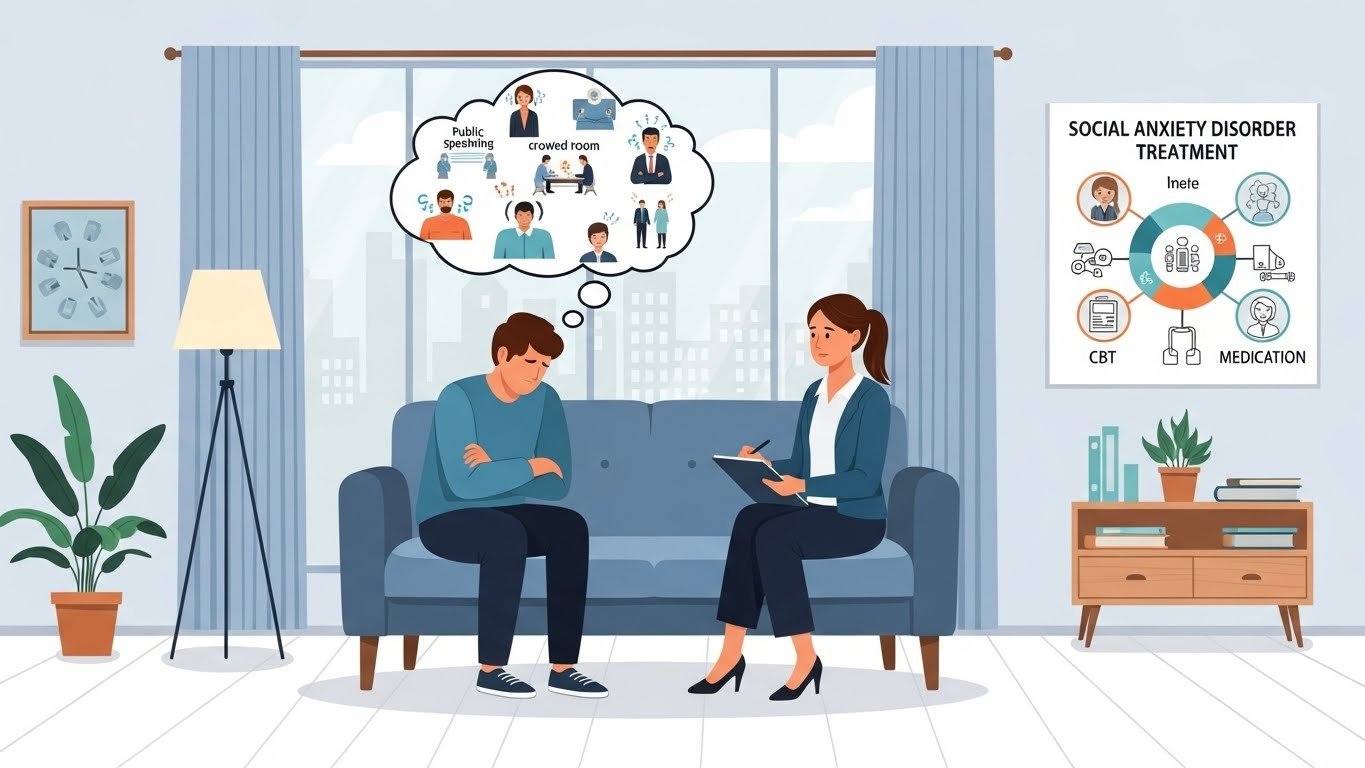
Feeling nervous before speaking in front of a large audience or when meeting someone new is quite normal. However, if the fear of being judged, embarrassed, or the social situations dominating your life is the case, then it might be deeper than that – social anxiety disorder could be the reason.
This is the problem that smiles people pretend, plans people cancel, or “I am just shy” people say, and yet it still affects millions of people worldwide. Nevertheless, it is much more complicated than just being shy. Socially anxious individuals often experience symptoms similar to panic, and therefore they avoid social activities due to their constant fear of being judged.
Understanding Social Anxiety Disorder
If you have already heard about therapy methods, tried to understand the symptoms, or wanted to find a suitable drug for social anxiety disorder, then this guide with its expert-backed insights, compassion, and clarity will be your support in understanding this condition.
We will take it stepwise way and clarify each point.
What Is Social Anxiety Disorder?

Social anxiety disorder or the condition of extreme fear of situations/meetings with people where one can be watched, judged, or embarrassed is the main feature of a mental health problem. In the old day, it was called “social phobia”.
Social Anxiety Disorder DSM-5 Definition
The social anxiety disorder DSM-5 definition points that the disorder is characterized by:
- Persisted fear of social or performance situations
- Being scared that others would judge negatively
- Giving up social interactions
- The symptoms duration of at least 6 months
- The symptoms noticeably interfere with everyday life, school, work, or relationships
ICD-10 Social Anxiety Disorder
Social anxiety disorder ICD-10 is a classification of social phobias under the code F40.1 (also referred to as ICD 10 social anxiety disorder).
Symptoms of Social Anxiety Disorder: What It Actually Feels Like
The symptoms may be experienced emotionally, mentally, physically, or behaviorally. Most people don’t even realize that their symptoms are related to a certain condition until they see it recognized.
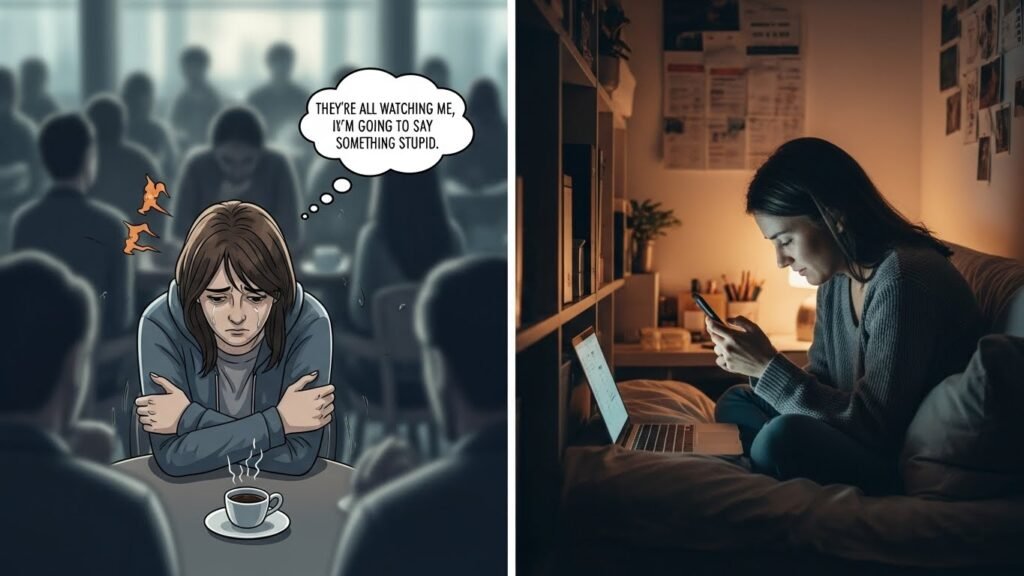
Common symptoms may include:
- The absolute terror of being watched or judged
- Not being willing to speak in public, eat, or write when others can see
- Making little or no eye contact
- Excessive sweating, trembling, and shortness of breath
- Social situations are accompanied by nausea or stomach discomfort
- Going over the conversation in your mind (“Did I sound weird?”)
- Being fearful of embarrassment or humiliation
- Though you want to go, you cancel your plans
If you are unsure whether these signs apply to you, then a social anxiety disorder test will be a source of insight.
Medication Options
Medications are often used along with counseling sessions to help relieve the symptoms. Different types of medications affect different people in different ways.
The most common social anxiety disorder medications include:
- SSRIs: sertraline, paroxetine, fluoxetine
- SNRIs: venlafaxine
- Beta-blockers: most of the time used for performance anxiety
- Benzodiazepines: for instance that is severe and short-term
Sometimes, these are considered medications for social anxiety disorder or commonly referred to as social anxiety disorder drugs. A qualified healthcare professional or your doctor will help you choose the most suitable social anxiety disorder medication based on your symptoms, overall health, and lifestyle. For more insights on mental health treatments, anxiety disorder management, and prescription options for anxiety, you can explore trusted resources in the health department
Expert Tip: The medication works best when combined with therapy sessions rather than when used alone.
List Of Therapies That Truly Help
Now, treatment is better and more efficient than it used to be. Most of them focus on changing one’s negative thought patterns as well as reducing one’s avoidance of the feared situations.
1. CBT (Cognitive Behavioral Therapy)
CBT for social anxiety is the main treatment.With the help of CBT you are able to:
- Recognize what causes your anxiety
- Dispute the negative thoughts
- Reduce the behavior of avoiding the feared situations
- Acquire social skills and gain more confidence in social situations
2. Exposure Therapy
It helps to change the fear response of your brain by breaking down the feared situations and exposing you to them gradually, hence, in a way that is safe and under control.
3. Social Skills Training
In case the reason for your anxiety is the feeling of not being able to confidently hold a conversation or interaction, then this would be very helpful.
4. Group Therapy
It gives a support system where one can practice social skills.
5. Psychotherapy for Related Conditions
There can be a mix of confusions where phobia social anxiety disorder is mixed up with other anxiety-related issues. A therapist can figure out the difference and have the solution.
Avoidant Personality Disorder vs Social Anxiety
A question that a lot of people have and is: “Is avoidant personality disorder just severe social anxiety?”
Not exactly.
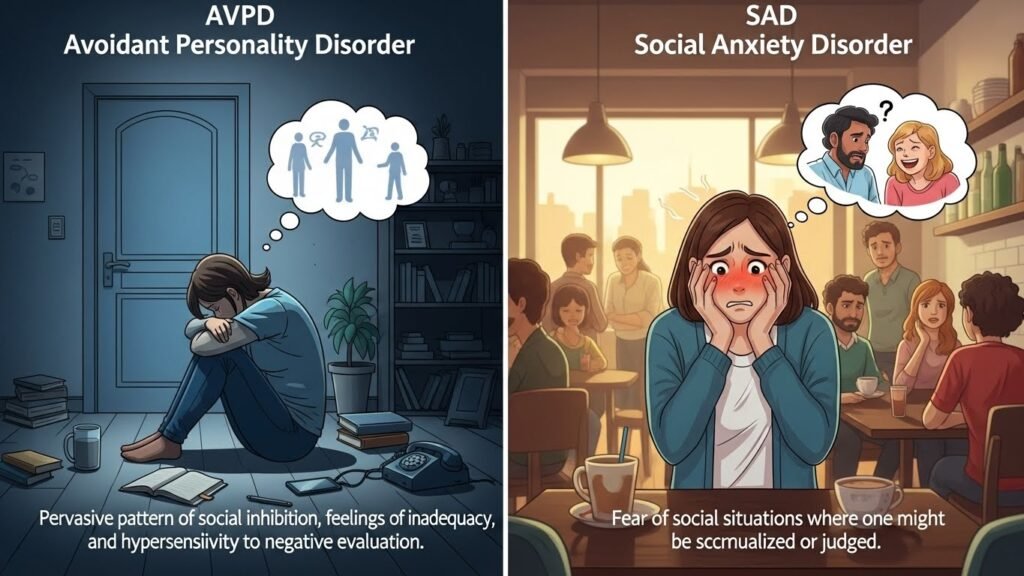
Social Anxiety Disorder:
- Fear restrains a person because of the potential of negative judgment
- The signs of the disorder are triggered by social situations
- Mostly being more situational
Avoidant Personality Disorder (AvPD):
- Withdrawn socially due to a long-term pattern of inhibition
- Extremely low self-esteem
- Avoidance of almost all interpersonal situations
- More generalized across all life areas
The only way for the right diagnosis is an evaluation done by a professional.
Disorder Treatment: What Recovery Really Looks Like
A combination of the best Social avoidance anxiety treatment plans can be:
- CBT
- Exposure exercises
- Medications (if necessary)
- Change of lifestyle
- Mindfulness exercises
- Trusting relationships
Recovery is not always instant but it is definitely possible. With persistent effort, social situations that used to scare you a lot can become manageable or even enjoyable.
Adjustment Disorder With Anxiety — A Social Work Perspective
Many people see tons of reports quoting: “What does adjustment disorder with anxiety mean in social work?”
In social work and clinical practice, this diagnosis refers to:
- The person subsequently shows anxiety symptoms
- The main factor of those symptoms is a specific and identifiable stressor (divorce, job loss, relocation, etc.)
- The symptoms occur within three months of the stressor
- It is not a long-term condition like social anxiety disorder
Social workers use this diagnosis to plan treatment and support that are tailored to the individual’s life event.
Frequently Asked Questions (FAQ)
1. How do I know if I have Social avoidance anxiety?
If social interaction becomes a terrifying foe due to fear, embarrassment, or avoidance, then a social anxiety disorder test or a professional evaluation will be very helpful to you.
2. What therapy works best for social anxiety?
Generally, the most effective therapy is considered to be CBT, especially when used along with gradual exposure.
3. Are medications necessary?
Not necessarily. Some people improve through therapy only, but many are better off if they take medications for social anxiety disorder along with therapy.
4. Is social anxiety the same as being shy?
Not. Shyness is a personality trait of one’s character, social anxiety is a mental health issue that can be confirmed by diagnosis and it significantly lowers the level of one’s daily functioning.
5. Can this disorder be cured?
Most of the social anxiety disorder sufferer, with the right treatment, will experience long-term improvements or even full recoveries.
Conclusion: You’re Not Alone — And Help Is Available
Social avoidance anxiety may cause one to feel alone, but in reality, there is help and recovery is definitely possible. Whether you are figuring out therapy options, searching for the best social anxiety issues medication, or just trying to make sense of your symptoms, stepping out first towards understanding is a strong move.
You deserve confidence, comfort, and connection – and the right support can make your journey to them easier.