
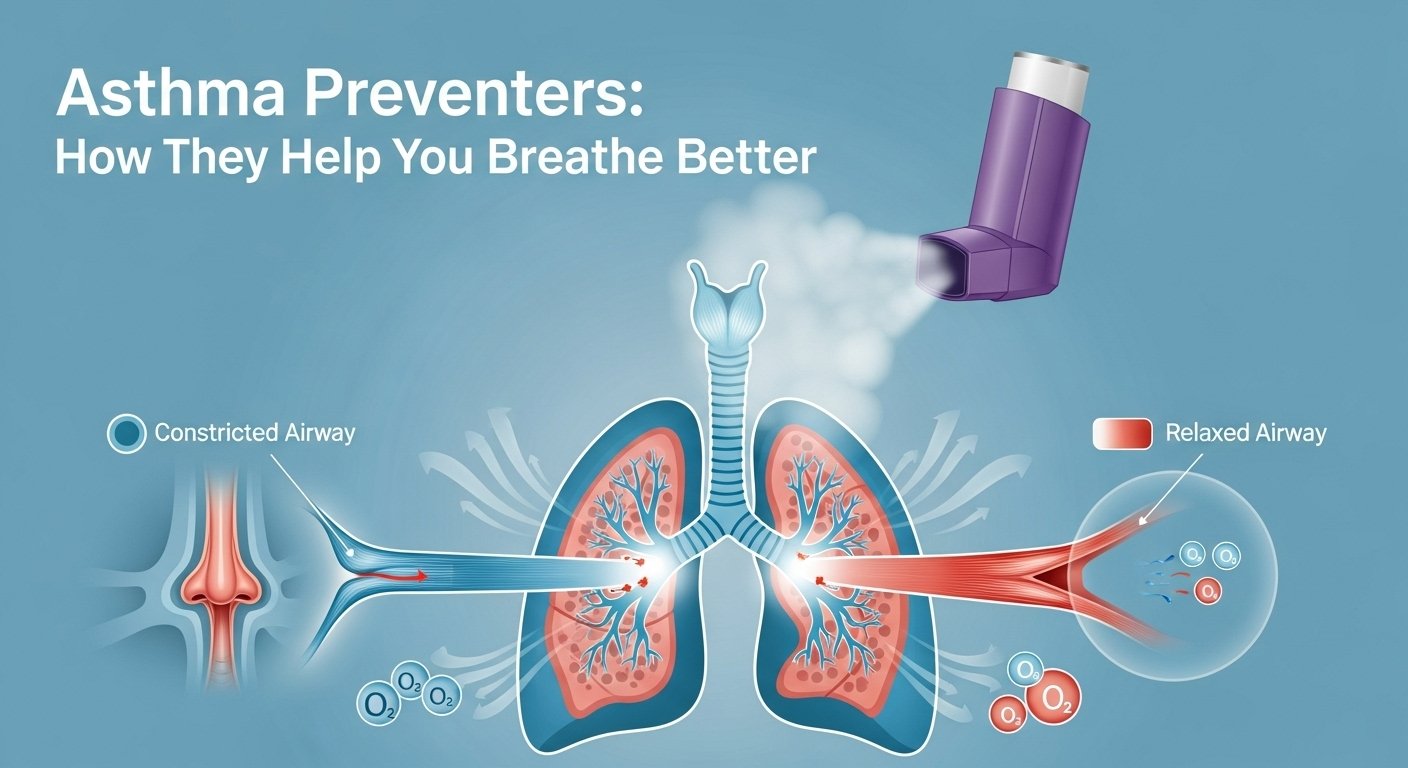
Living with asthma means learning to become aware and attentive to certain things that might not even cross other people’s minds. A tight chest in the morning. Coughing that lasts a bit too long. Asthma preventers generally don’t cause any disturbance to this kind of daily awareness. They keep doing their work in silent mode, even before symptoms come out.
What Is Asthma After All?
Often, even before discussing the treatment, it pays to take a step back and first answer a very simple question, really: What is asthma?
Asthma is an ongoing lung disease that affects the air passages with inflammation, which makes them very sensitive and they narrow easily when exposed to triggers. For some people, it’s such a small thing that it hardly ever bothers them. For the rest, it controls their daily lives, sleeping, exercising habits, and even how confidently they step out of their homes.Asthma manifests itself in a different way in each individual. Therefore, it can be a source of confusion and misunderstanding, especially among those who only think of it in terms of emergencies with dramatic rescues.
Asthma Symptoms Can Be Quiet
Sometimes the signs of asthma come without drama or noise. A very slight wheeze when one is laughing. Feeling breathless only after climbing stairs. The characteristic asthma cough that usually occurs during the night. However, other times, the symptoms are so obvious that it is difficult not to notice them. Tightness in one’s chest. Accelerated breathing. Feeling extremely tired for no apparent reason. These asthma symptoms usually come and go, which can confuse patients and lead them to believe that their asthma has “gone away”—a misconception often clarified only after proper medical evaluation at specialized centers like INMOL Cancer Hospital or other advanced healthcare facilities.
Unpredictability is one of the greatest difficulties of asthma.
Important Differences Between Asthma Signs and a Full Attack

It is extremely important to make a distinction between the initial signs of asthma and an asthma attack.Early signs are difficult to detect since they are so subtle. Breathing might feel a little bit more difficult than usual. It is, for example, harder to speak while moving. You may not even be aware that you are increasingly using your asthma inhaler as a result of this gradual and subconscious change in your breathing.
When the body initiates an asthma attack, it is effectively giving off a distress signal. The constriction of the airways is much more pronounced than usual. Breathing is very difficult. The sound of wheezing becomes louder. The ability of the person to speak in full sentences gets restricted in the most extreme cases. Catching and dealing promptly with the early symptoms of a change might help to keep the attack from getting out of hand.
As to What Causes Asthma Initially?
It would be misleading to say that a single thing is responsible for asthma.
Genes definitely matter, but so does the environment. Allergens, pollution, respiratory infections, cold air, smoke, stress, and even physical activity are all capable of causing symptoms of asthma. While some children get asthma fairly quickly, others only come to know the disease in their adult age. This topic continues to be a major concern in Australia where the prevalence of asthma is high, especially in discussions around asthma research, public health policies, and even related factors like magnesium glycinate vs citrate that are often explored in broader conversations about respiratory health and symptom management.
Asthma Treatment Is More About Control
Then again, there is no cure for asthma, and this is something generally hard for people to accept initially.
But really good asthma treatment isn’t just about getting rid of the disease. It’s really all about control.Control means less discomfort. Good rest. Less worry about the worsening of asthma. Medical emergency calls becoming a thing of the past. Treatment plans are based on this concept of prevention rather than reaction.At this point daily medications and long-term strategies quietly matter most.
Asthma Inhaler: Rescue versus Preventive
Most people would agree with the statement that they have an asthma puffer which is used primarily for quick relief. It is a very efficient drug, it immediately dilates air passages. It is comforting to have one within reach.However, relief inhalers only respond to symptoms. They don’t do anything to the underlying irritated condition of the airway that causes the symptoms to happen. And, as a result of inconsistency, people will probably use their inhalers more frequently to treat the symptoms that they are experiencing at that time, rather than to reduce the severity of their symptoms over time.
This difference becomes significant when long-term control is discussed.
Asthma Preventers Work By Gradually Reducing Inflammation
Unlike asthma relievers that offer instant, temporary relief of symptoms, preventers moderate the disease in such a way that they directly target the cause – the inflammation of the airways killing the symptoms before they occur.Consistency is therefore of ultimate importance. Missing doses because “I am fine” only allows inflammation to flare up once again. The results are not always immediate, and that is why people sometimes get the wrong impression.If used correctly, asthma preventers can not only reduce symptoms such as cough and excessive mucus production, but they can also lessen the frequency of nocturnal….
Exacerbation and Flare-Ups
An exacerbation is essentially an asthma attack that lasts longer than usual or is more intense. An individual might—or might not—be aware of this change in asthma severity, as it often comes on gradually or suddenly. The stimuli that provoke it vary from one individual to another. A bout of cold. A change in the weather. Stress that accumulates silently.
While exacerbations often do not necessitate emergency treatments, they do call for a temporary modification of the medication regimen in most cases. Knowing when your asthma starts to worsen is crucial since ignoring the early symptoms can turn a manageable flare into a full-blown crisis.This is when asthma treatment plans designed for achieving long-term disease control really show their merit.
Burst Therapy: Short Term Medicating Escalation
When substantial exacerbations occur, burst therapy refers to the brief use of high-dose drugs, mostly oral corticosteroids. Such treatments, however, should be reserved for great emergencies only and not be regarded as maintenance plans.
In many cases, relief is felt very quickly after burst therapy. Respiratory function returns to normal, which results in an increase in energy level. Nevertheless, it cannot be considered a substitute for proper daily management. If a patient is repeatedly seen with a need for burst therapy, the reason is typically that their underlying control is poor and needs reassessment.Physicians use this method prudently, carefully balancing its advantages against the risk of side effects.
Asthma Australia and the Changing Perception of Long-Term Management
Discussions around asthma Australia over the years have seen a gradual shift in emphasis – from just responding to asthma emergencies to managing asthma proactively through education, asthma action plans, preventive treatment, and continuous review. Well-being with asthma has been recast by these discussions as a collaborative effort between the patient and the healthcare provider team, often supported by broader systems such as health insurance in Australia. Identifying triggers, keeping track of symptoms, and altering therapy when patterns change are parts of this new concept. Recognizing that we are dealing with a disease that changes over time rather than a static diagnosis, this approach seeks to provide a solution.
Asthma is a Whole-Life Change, not a Snap Decision

Managing asthma goes far beyond taking medication. A lot more than that is it about awareness.
Recognizing when your breathing patterns have altered. Keeping track of the cycle. Knowing the environmental factors that worsen symptoms. Discovering when it is good to rest and when mild exertion is permissible.Sometimes the body responds better and other times worse. It doesn’t mean the medication didn’t work. It’s just that your body reacted to the conditions in the real world. What is more important is flexibility than perfection.
Relief vs. Preventive Approach
| Aspect | Relief-Focused Only | Preventive Strategy |
|---|---|---|
| Symptom control | Reactive | Proactive |
| Inflammation | Untreated | Reduced |
| Night symptoms | More common | Less frequent |
| Risk of attacks | Higher | Lower |
| Daily stability | Variable | More consistent |
Asthma Cough Mostly Happens at Night
Asthma cough is silent and persistent like a ghost. It usually strikes when everyone else in the house is fast asleep or when you have just woken up.Most people ignore the symptoms and dismiss them as an insignificant nuisance.However, recurring nocturnal symptoms in a patient may actually indicate that the inflammation in his/her airways is not being sufficiently controlled and that the current treatment regimen may need to be re-evaluated and possibly changed.Getting enough sleep is not only good for you in general, but it’s also one of the best indicators of proper asthma control.
A Community Perspective on Asthma
In most communities, asthma is also known as asma by the locals. The significance of language cannot be overemphasized. Cultural sensitivity goes along with it as well.
Depending on their cultural background, people may differ in the way they describe symptoms. Some would minimize the shortness of breath. Others make a habitual cough sound normal. Healthcare conversations get most benefitted when the issue of the language barrier is not looked over but rather addressed.Open and honest communication certainly paves the way for the implementation of treatment plans in real life.
Why Consistency Matters Even More Than Perfect Asthma Management
Asthma management doesn’t reward perfect performance. What it really appreciates is consistency.
You may have missed a dose. You are having a bad week. Travel has messed up your routine. Being perfect is not the goal. It is getting back to your normal, well-controlled state as soon as possible after a slip.You establish long-term control very quietly through consistent habits, and you hardly even notice them at the time because they seem so boring.
When Should a Doctor’s Review of an Asthma Treatment Plan Be Considered?
Asthma treatment plan guide documents are not “set and forget” type of things. They require updating whenever there is a change in symptoms, life situation, or medication needs.
The increased use of the puffer
More frequent episodes of asthma during the night
Difficulty in exercising
These are signs, not failings. If intervention comes early enough, the problem will not have grown big.Regular check-ups help you keep an upper hand in your asthma management.
FAQ — Frequently Asked by Patients
What are asthma preventers used for?
They are used to reduce inflammation in the airways over time, helping to prevent symptoms from developing rather than treating them after they appear.
Can asthma symptoms change as a person gets older?
Yes, triggers, severity, and symptom patterns can change with age, lifestyle, environment, and overall health.
How are asthma symptoms different from an asthma attack?
Asthma symptoms are often mild and ongoing, while an asthma attack involves sudden worsening of breathing, tightness in the chest, and difficulty speaking.
Is burst therapy safe?
When used for a short period and under medical supervision, burst therapy is generally considered safe, but it is not intended for frequent or long-term use.
Why is coughing worse in asthma patients at night?
Nighttime coughing can be caused by airway inflammation, body position while lying down, and natural changes in breathing patterns during sleep.
When asthma treatment works well, it’s hardly noticeable. It simply becomes part of your routine, and you breathe without even thinking about it. Most people fail to realize that this calm and steady state is actually what they have been unconsciously longing for until the moment they have it.