
Sinus infections are annoying, heavy, and somewhat frightening when they keep for a long time. People start wondering things they never thought of before. One of those questions—are sinus infections contagious?—is that keeps appearing every winter, every allergy season, and every time someone sniffs too loudly.
Understanding Sinus Pain and What Actually Causes It
Sinus pain is among those experiences that catch you by surprise. It is not quite a headache. It is not quite facial pressure. More like the entire forehead and cheekbones of your face have decided to protest at the same time. And when this continues to happen, people usually assume it is an “infection,” but not all sinus problems are infections. Sometimes it is allergies, sometimes it is dry indoor air. Sometimes it is a cold that has gone too far.
The sinus cavities can become inflamed due to various reasons such as pollution, changes in weather, viral infections, bacterial growth in blocked passages, and even structural problems. And when inflammation accumulates, mucus does not drain properly. This is when the pressure begins.
Many people believe that sinus infections are always contagious. However, it is not always the case. The thing that causes the sinus problem may be contagious or not. And this is the point where the confusion starts.
Are Sinus Infections Contagious? Clearing Up the Confusion
Without complicating it too much, we should clarify this part. The sinus infection itself, i.e., the swelling in the sinus cavity, is quite often not contagious. What, however, can be contagious are the viruses that lead to them.
Colds. Flu. The seasonal bugs that are spread in offices or schools. These can be transmitted from one person to another without any trouble. Sometimes, they can become the cause of sinus problems in a person who is already sensitive.
So when people ask “are sinus infections contagious?”, they confuse two concepts:
- The infection itself (sinus inflammation) → normally, it is not contagious
- The viral trigger leading to infection → can be contagious
This difference is not always clear in daily talks, so the misunderstanding is still there.
When you see someone with sinus pain, your first reaction is to stay away from him/her as if he/she is a germ spreader. But in reality, in most cases, the person is just suffering from an old cold infection that happened weeks ago and which he/she cannot give to you.
Sinusitis: Contagious or Not? The Medical View, Simplified
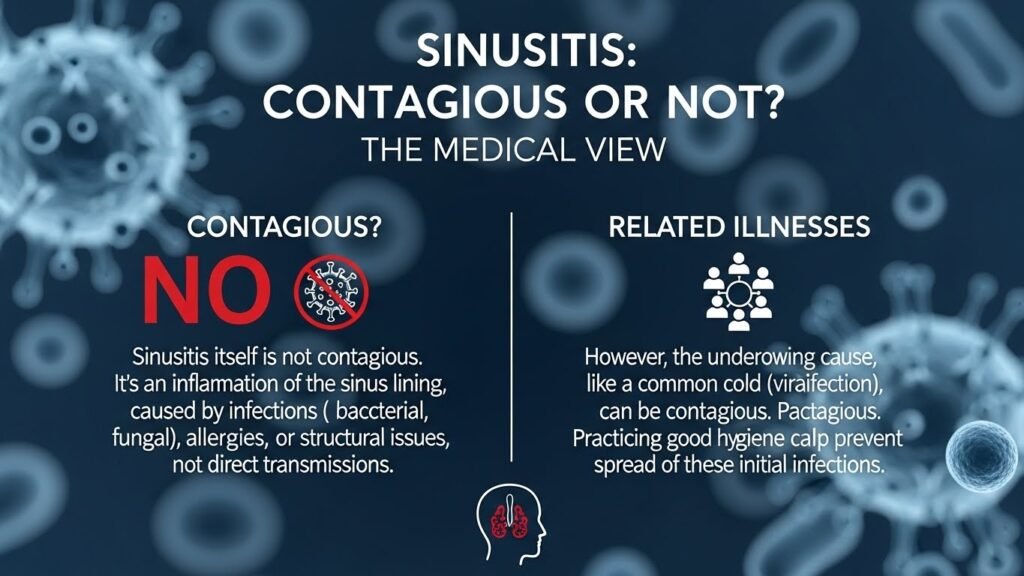
Sinusitis is the term that people use interchangeably. Acute sinusitis, chronic sinusitis—medical terms that may seem scary. But the question that people want to know is quite simple: is sinusitis contagious?
Here is the correct and safe version of the answer:
- Viral sinusitis → The virus causing the infection is contagious, not the sinus swelling
- Bacterial sinusitis → No, not contagious
- Allergy-related sinusitis → Not contagious
- Structural sinusitis (e.g., deviated septum) → also not contagious
So, if someone tells that his/her sinusitis was caused by a cold, then yes, the original virus of the cold can be transmitted, but the sinus inflammation is the immune system’s reaction, not something they give to others.That is the reason why you can see the whole family getting the cold, but only one member develops a severe sinus infection.
Why People Get Mixed Signals
It is because cases often show the same symptoms that it occurs:
- runny nose
- stuffy head
- coughing
- fatigue
- sinus pressure
So, if two people at home have the same complaints, it may seem like the sinus infection has “spread.” In reality, what spreads is the virus, not the inflammation that follows. It’s similar to how everyone in a household can catch the same cold, but only some people develop complications.
And honestly, sinus complications usually appear in people who already have sensitive sinuses, suffer from allergies, or are affected by environmental factors such as pollution or dry air. Stress and mental health can also play an indirect role—conditions like social anxiety disorder are known to weaken immune responses, which can make the body more vulnerable to infections and inflammation.
So, the contagious part is not the sinus infection itself, but the underlying cause—most often a virus.
Sinus Infection Treatment (General, Safe Guidance Only)

The treatment for a sinus infection varies with respect to the source of infection—viral, bacterial, or caused by allergies. Public health guidelines mostly suggest symptomatic treatment in case of viral infections while doctors may choose different treatments if the symptoms are severe or if a bacterial infection is present.
But here is the main point: Sinus infections are not always to be medically treated. That is what surprises people. They take for granted that there is a pill for everything. But sometimes the body takes care of it itself.
Doctors generally consider:
- length of symptoms
- fever changes
- intensity of sinus pain
- discharge color is not always trustworthy (another misconception)
- pre-existing allergies or anatomical problems
And if the symptoms are too long or getting worse, a medical check-up becomes necessary—not Google diagnosis.However, as part of a typical explanation, most short-term sinus problems are of viral origin and get better after some time.
Signs Your Sinus Infection Is More Than Just Sinus Pressure
There is a lot of fear on the internet that sinus infections can “spread to the brain.” Most of that fear stems from severely unfortunate stories that are getting more frequently recirculated than they should be.Let’s address this issue in a safe and responsible way:
Serious sinus complications are very far in the realm of possibilities, especially when considering current healthcare.
However, people are still concerned; thus, here is the gist of general awareness:
How to tell if brain got affected by sinus infection? (general signs only):
Reliable public health sources say extremely severe symptoms may include:
- very high and long-lasting fever
- severe headache different from common sinus pressure one
- difficulty in bending the neck
- loss of memory
- vision changes
These symptoms don’t imply “brain involvement for sure.” They just indicate the necessity of quick medical help since they could point to serious conditions in general.For the vast majority of people with sinus problems, this is never a concern. But since sinus pressure can be quite intense and frightening, folks keep wondering about it and searching for answers.
Why Sinus Symptoms Are Much
Sinus inflammation is a clever one. It brings pain to areas you probably wouldn’t have thought of, such as around the eyes, under the cheeks, behind the forehead. Sometimes even teeth hurt. The brain receives all these signals and interprets them as something bigger, which is why people feel scared.You are in a fog. Heavy. Maybe a little out of it. Not dangerous—just uncomfortable.And when you look up symptoms online, the result sends you straight to panic mode. Web searches are not polite.
Environmental Triggers That Cause Sinus Issues (Not Contagious at All)
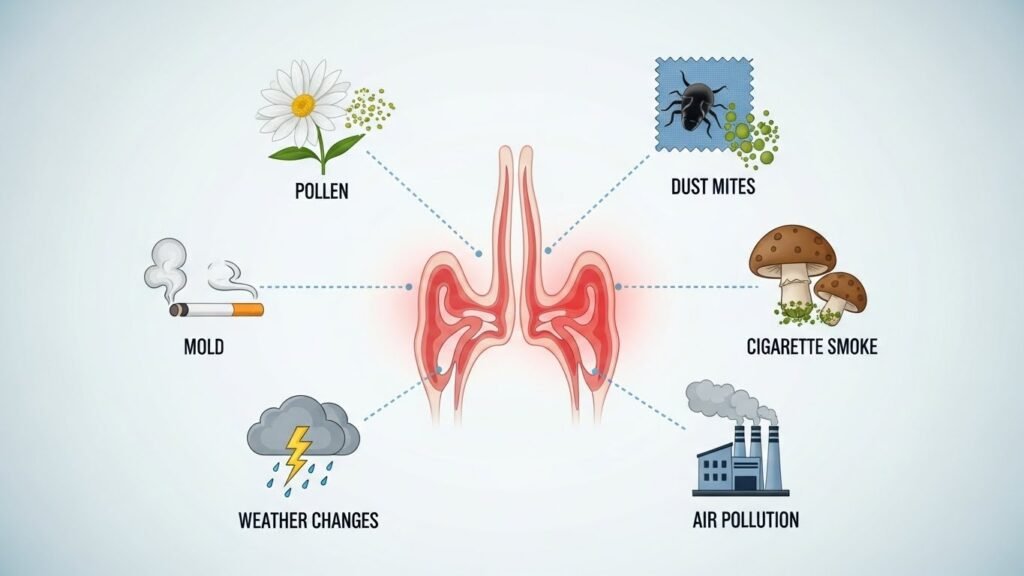
People often forget that the sources of sinus symptoms are many and most of them are non-infectious:
- dust
- cold air
- strong fragrances
- mold exposure
- dry indoor air
- smoke
- allergies
- air pollution
All of these factors are non-contagious, still, they give rise to symptoms that are indistinguishable from those of viral sinusitis.
An entire office building can start to cough just because the HVAC system is not working properly. This does not mean that people have infected each other.
What’s Contagious and What Isn’t?
| Sinus Trigger Type | Contagious? | Notes |
|---|---|---|
| Viral sinus infection | The virus, yes | The sinus inflammation itself isn’t |
| Bacterial sinusitis | No | Usually arises from blockage |
| Allergy-related sinusitis | No | Triggered by allergens |
| Structural sinus issues | No | Deviated septum, polyps, etc. |
| Environmental irritation | No | Pollution, smoke, dust |
| Flu or cold viruses | Yes | These can lead to sinus symptoms |
Most of the confusion comes from this point—two different things overlap.
Why People Keep Getting Sinus Problems Over and Over
Sinus openings are very delicate. Once an infection has started, it can be very likely to return because the way for the drainage will still be left vulnerable. Also, some people think that each time they get an episode, they are “contagious,” but actually:
- the weather changed
- allergies got worse
- the indoor humidity dropped
- they got a new cold
- they didn’t fully recover the first time
It’s not always a matter of infection. Most of the time it’s irritation.
Chronic Sinusitis vs Acute (Not the Same Thing)
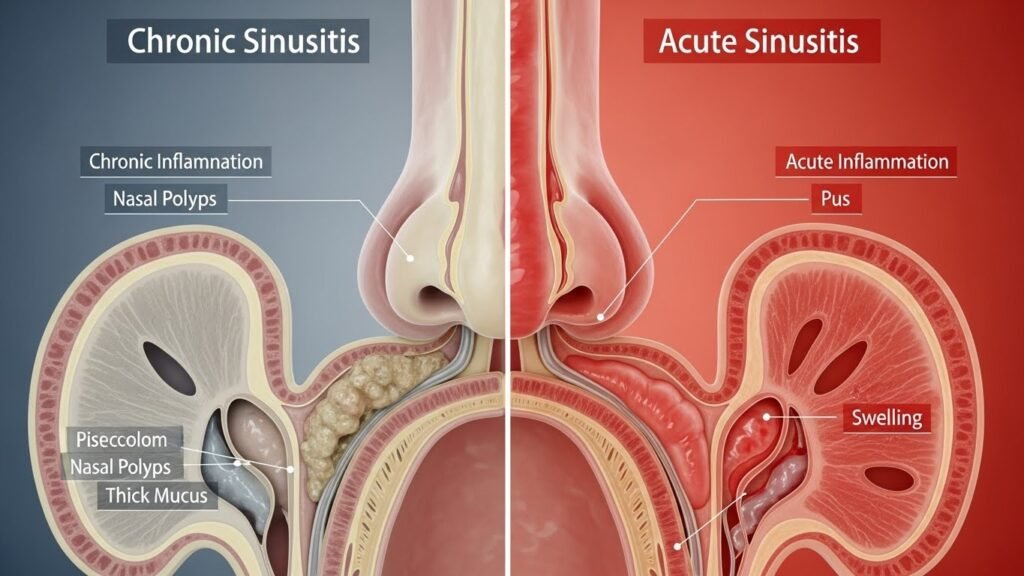
Chronic sinusitis may continue for several months. Not contagious. It is not something you can “catch.” Usually, it is associated with:
- cycle of allergies
- continuous inflammation
- problems with nasal structure
- being exposed to irritants
Acute sinusitis (temporary) may come after a cold. The cold is contagious, not the swelling of the sinuses.
What People Should Actually Consider (General Safety Advice Only)
Not interacting with sick people will protect you from viruses.
Keeping away from allergens will protect you from inflammation.
Protecting yourself from dry air is also good.
Nevertheless, there is no single prevention that is capable of stopping sinus problems forever. Different people have different reactions.
This unpredictability is actually the reason why people keep asking are sinus infections contagious? (Main keyword, second use.)
Letting This Taper Off Naturally…
Sinus problems seem a lot more serious than they really are. The majority of the fear is due to the misunderstanding of what is and what isn’t contagious. Some come from Google searches that escalate anxiety. Some from personal experience—because sinus pressure can be really intense.
The inflammation eventually leaves, and you are left wondering why the whole thing was so big after all… letting the thought fade out a little.
FAQs (People Also Ask)
1. Can you catch a sinus infection from someone else?
Not that often. The virus that may lead to sinus inflammation can be caught from someone, but the infection as such is not spreading.
2. How do you know if your sinus infection is viral or bacterial?
Symptoms and duration differ greatly, but only a healthcare professional can make a safe and accurate diagnosis.
3. Can sinus infections turn into something serious?
Complications are very unlikely. Severe and/or unusual symptoms call for doctor’s advice.
4. How long do sinus infections last?
Typically, viral sinus symptoms last about 1–2 weeks. Chronic forms may last for much longer periods.
5. What helps sinus pressure feel better?
Implementing comfort measures and providing supportive care help ease symptoms. If issues are persistent, medical evaluation may be required.