Some days, I find writing so effortless. Words just come to me. Images pop into my head. Characters take over and start talking to me on their own.But, I have other days where nothing materializes. Just a blank screen and a cursor flashing at me. And in total silence.That’s when most of the times—creative writing prompts come for the rescue. Not as a strict code to follow. Nor as limitations. More as gentle pushes. Tiny sparks. Something to set the brain in motion again.
They don’t do the writing for you.
They simply unlock the door for you.
In the form of short ideas, images, questions, or scenarios, creative writing prompts serve as a tool to help a writer to get started on a story, poem, or personal write-up. The main goal of these prompts is to identify a path of writing rather than starting from scratch, which can be intimidating. Students, teachers, as well as professionals, can use prompts as a means to boost their imagination, creativity, experimentation, and thus gain confidence in writing.
What are writing prompts?
They are ideas or situations in short form, which help stimulate the writing process.
Are they helpful to experienced writers?
Yes, many seasoned writers incorporate writing prompts into their creative process to maintain a high level of creativity.
How do they function?
They provide an idea to start your thinking, instead of staring at a blank page.
The Way Writing Prompts Function
In essence, writing prompts work because they alleviate the tension involved in brainstorming. When you sit down to write and look at an empty page, your brain suddenly tries to decide on so many things at the same time—plot, voice, setting, mood, theme, etc.—that you get overwhelmed. Writing prompts help you focus on one idea at a time, much like how people try to make sense of major digital events such as the Optus data breach by breaking complex situations into smaller, understandable parts.
A writing prompt tells you, “Start here.” It may be a picture composition or a question. Whatever it is, it directs your attention to a single point, making it easier to create something instead of feeling stuck.After you get the ball rolling, momentum carries you along. Ideas keep flowing. Characters come to life. Scenes are set. The original prompt gradually fades into the background, silently fulfilling its purpose.
Bubble Writing and Visual Thinking
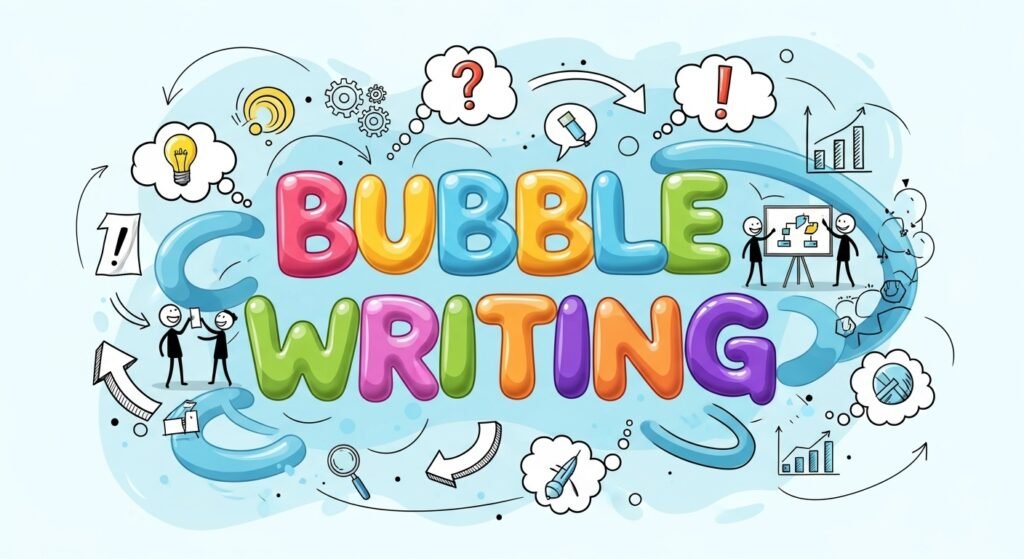
Bubble writing method is a brainstorming technique in which the points stem out indefinitely from one main word or theme. It’s quite straightforward, isn’t it? Circles joined by lines. Words are just spread in the air.Nevertheless, it succeeds in its purpose because it represents more or less how the mind works. Our thought process is non-linear, associative, and flexible.
Foremost, writers use bubble writing together with writing prompts to delve deeper into characters, settings, and emotions before composing a story. One single central point gets multiplied tenfold. Ten turn into fifty. Suddenly, the story has dimensions.It’s an excellent tool for visual thinkers and a great starter for young writers.
Pobble and Other Digital Prompt Platforms
One of the most popular websites providing daily writing prompts, visuals, and storytelling starters for schools and independent learners is POBBLE. Teachers use it to motivate students to write regularly. What sets Pobble apart from random prompt generators is that it designs prompts with questions and vocabulary suggestions that guide students beyond shallow writing, much like how thoughtful tools compare in discussions such as DeepSeek vs ChatGPT when evaluating AI-powered writing platforms.
Other platforms feature Teach Starter login systems, similar avenues or aids. Thanks to these virtual environments, prompt-based writing is reachable 24/7.Technology is not a rival to creativity. It is a tool to promote it.
Writing From a Picture Prompt
One of the best ways to unleash your creativity is through writing from a picture prompt. A visual has many layers of stories embedded in it. Who is the person in the image? Why is he/she there? What happened before? What will happen next?Writing prompt visuals effectively overcome linguistic barriers. They work not only cross-culturally but also intergenerationally. Everyone interprets a visual in a slightly different way.
Writing prompt pictures are one of the favorite materials for teachers to use to stimulate their students’ descriptive language development. Colors, sounds, textures, movement—all these small details are noticed and described more carefully when one has to translate a visual into words.
Advantages of Writing Prompts
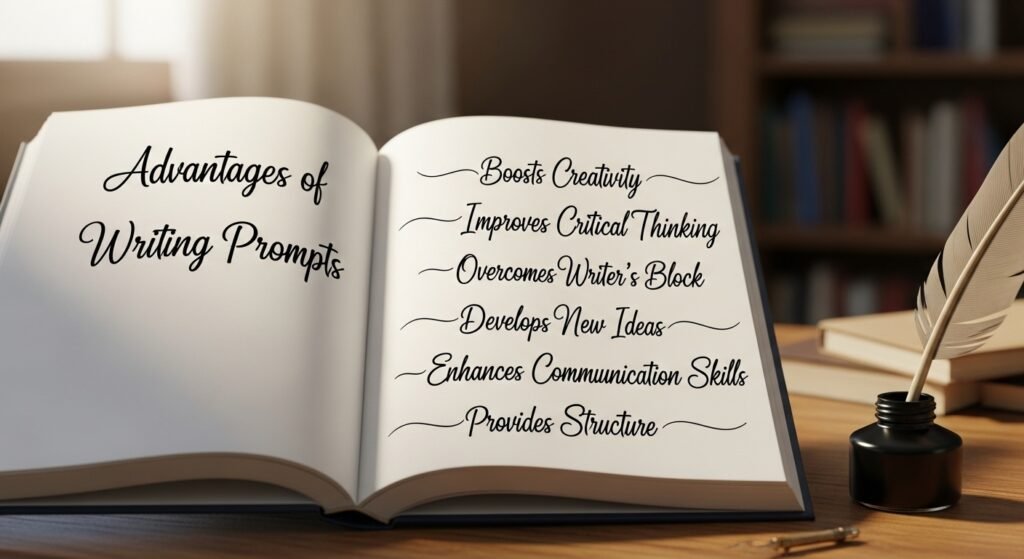
The main advantage is persistence. A prompt leads to writing regularly, and it stops being an occasional activity. You just sit down, you pick one, and you write. What’s more, prompts make writing less scary. Most people shy away from creative writing because of the belief that they are not “good enough.” Using tools like Aelftech live chat support and guided prompts lowers the pressure. You are testing, You are playing. You are discovering.
Another thing that prompts bring to the table is their diversity. They serve fiction, nonfiction, journaling, poetry, and storytelling starters adequately. A single idea can be the source of a plethora of different outcomes.
Creative Writing in Education
Prompt-based learning is a major approach schools use to teach students how to narrate and communicate effectively. Such skills help students become great thinkers, empathize with others, and express themselves.Teachers can assess and track the student’s performance cleverly and easily justify difficulty levels with resources like Teach Starter login and Pobble.Prompting gives a hand to learners with different learning needs. When structure is present, it is easier to be free.Education and creativity can be friends.
Stories Prompted by Real-Life Examples
- A student is given a photograph of a deserted lighthouse. Writes a paranormal story.
- An adult was given a prompt about a forgotten letter. He develops a family drama.
- A little girl receives a sentence: “The door opened by itself.” She writes a fantasy adventure.
Identical starting point. Worlds that are totally different.
That’s the wonder of it.
Major Writer’s Mistakes With Prompts
One of the biggest mistakes writers make is treating a prompt as a strict command rather than a flexible suggestion. A prompt is meant to inspire, not restrict creativity, yet many people follow it too literally and limit their own ideas. Another common problem is overthinking originality before even starting, which often kills motivation and momentum. Some writers also give up too quickly when a prompt feels uninteresting at first. Instead of abandoning it, they should allow the idea time to grow and develop naturally. Trusting the creative process is essential for meaningful writing to emerge.
Prompts vs. Free Writing
Free writing allows writers to express thoughts freely without any structure, while prompts provide gentle direction and focus. Both approaches have unique advantages, as free writing encourages raw and unfiltered creativity, while prompts help guide ideas toward a specific theme. Many writers switch between these methods depending on their mood and purpose. Prompts are often useful for getting started, while free writing helps explore ideas more deeply. Using both methods together creates balance and flexibility. Writers do not need to choose one over the other to be successful.
Creative Writing Ideas and Expanding Prompts
Strong writers know that the first idea is only the beginning of the creative process. A simple prompt can grow into a complex story when characters gain personality, settings develop history, and conflicts become more meaningful. Over time, these elements connect to form a rich narrative. What begins as a short exercise can evolve into something much larger. Writing prompts act like seeds that contain potential. It is the writer who decides how far that potential will grow.
Long-Term Writing Projects and Prompts
Writing prompts are not limited to short stories or quick exercises. Many novels and long-term projects begin with a single paragraph inspired by a prompt. Over time, small sections expand into chapters, and chapters become full books. Writers often save unused drafts and revisit them later with fresh perspective. This habit ensures that creative effort is never wasted. In this way, creativity becomes recyclable and continuously valuable.
Prompt Libraries and Digital Tools
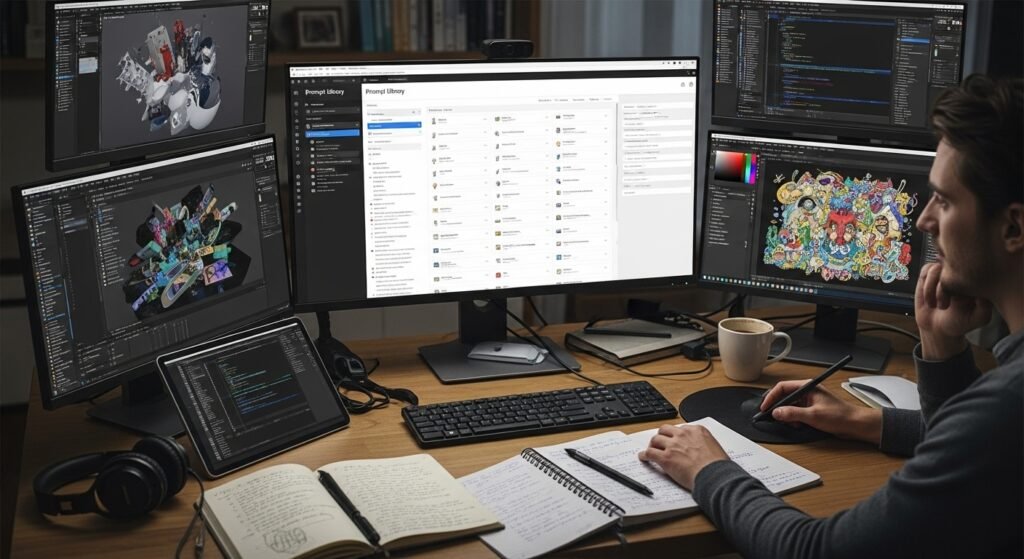
Modern writers have access to an enormous variety of writing prompts through digital platforms. Websites, mobile apps, newsletters, and social media accounts share daily ideas and challenges. Many of these tools organize prompts by genre, such as fantasy, romance, mystery, or memoir. This makes it easier for writers to find material that fits their interests. However, the abundance of options can be overwhelming. The real challenge is choosing one prompt and beginning.
Developing a Daily Writing Habit
- Talent matters less than persistence.
- One prompt per day is common. Ten minutes. No pressure.
- Skills grow naturally. Vocabulary expands. Confidence builds.
- Incremental progress.
A Simple Prompt Planning Table
| Purpose | Prompt Type | Example |
|---|---|---|
| Warm-up | Sentence | “It started raining inside.” |
| Story | Image | Stormy beach photo |
| Journal | Question | “What do you avoid?” |
| Poetry | Word | “Echo” |
| Classwork | Scenario | Lost backpack |
It works as a skeleton for practice.
Creative Writing Prompts in Professional Work
Creative writing prompts are not only useful for beginners but are also widely used by experienced professionals. Screenwriters, journalists, and novelists rely on prompts to overcome creative blocks and refresh their thinking. Prompts help them explore side stories, experiment with different perspectives, and develop new writing voices. Even after years of experience, writers still face moments of stagnation and self-doubt. In such situations, prompts act as reliable starting points that reignite imagination. Experience does not eliminate the need for inspiration—it simply requires the right fuel to keep creativity alive.
Full FAQ Section
How often should I use writing prompts?
You can use them daily or a few times a week, depending on your schedule. Even short, regular practice helps build confidence and consistency.
Do prompts limit originality?
No, prompts encourage creativity by giving you a starting point, not a finished idea. Your unique perspective makes each response original.
Can prompts help with writer’s block?
Yes, prompts remove the pressure of deciding where to begin and help you regain momentum. They are one of the most effective tools for breaking creative blocks.
Are picture prompts better than text?
It depends on your learning and thinking style. Visual thinkers prefer images, while idea-focused writers prefer text prompts.
Can I reuse old prompts?
Yes, you can reuse them as your skills and perspective change over time. The same prompt can lead to completely new ideas later.
Final Thoughts
On some days, what you produce will delight you.
On other days, it won’t. It’s all part of the game.
Prompts cannot guarantee perfection.
They help you move.
And movement is enough.
Write.
Adjust.
Improve.
And once again, write.