

Dengue symptoms seldom announce themselves in a dramatic way at the outset. They frequently sneak in quietly, initially resembling a stubborn flu that just won’t go away.The trouble is that what seems normal at the beginning can actually become dangerous if you ignore the signs.
What is Dengue and Why Is It So Confusing
Dengue is not a single disease with a single predictable pattern. It can show different effects on different individuals. For example, some people may be shattered in just a few hours, whereas others may continue for days thinking it’s just fatigue or a common viral fever.Some of the confusion is due to the very rapid changes of dengue. One day you feel very sick and the next you are strangely better, but then your condition worsens again. That brief period of apparent recovery is often when people underestimate the situation.
Dengue Fever Symptoms Begin Mostly Similar to a Flu
The first symptoms of dengue usually include a sudden high fever that does not go away even after rest.At the same time, the patient suffers from chills, extreme tiredness, and a feeling of heaviness behind the eyes. The discomfort is internal, almost like a pressure.The aches in muscles and joints can be so severe that it becomes difficult to move.This is the reason why dengue has been nicknamed “breakbone fever.” The term is neither poetic nor metaphorical; it is merely descriptive and quite disturbing when one experiences the illness.
Dengue Symptoms Besides Fever
When people inquire what are the symptoms of dengue, they are often taken aback by the many systems involved. The headache becomes relentless. Nausea suddenly appears. There is a sudden loss of appetite.Some patients experience photophobia. Others feel light-headed when standing up.
These symptoms can be seen as minor and therefore the disease is usually underestimated at the initial stage.
Dengue Symptoms and Skin’s Indicator

Sometimes the rash comes along with the fever but not always. Going by the fever–rash interval, the fever starts first and the rash comes a few days later.
Initially, the rash can appear in the form of red patches or tiny spots that disappear upon pressing them.The skin may also be felt as itchy or warm. In this phase, people are often confused because the fever might be on the decrease at that time.Most of them think that they are getting better, whereas the illness is still progressing.
Knowing About Dengue Fever Symptoms in Urdu and Culturally
In typical homes, dengue fever symptoms in Urdu would be represented through words such as “bukhar,” “jism dard,” and “kamzori.” Such terms enable family members to communicate but may also trivialize the severity of the symptoms.Our language influences our thinking. When symptoms are interpreted as regular fever, people tend to avoid going for tests. It is very important to comprehend the local vocabulary and at the same time identify the danger signals, especially during the season of high risk.
7 Major Warning Signs of Dengue Fever
Besides pain, the major warning signs of dengue fever mainly focus on changes in the behavior of the patient. One is vomiting that does not stop. Another is stomach pain so severe that it is almost unbearable. Blood may come out of the mouth or nose. Restlessness is at an extreme level. Other symptoms may free the patient suddenly but with difficulty, the patient properly breathes, and the energy level drops very quickly — a situation that, much like when people wonder how certain infections spread and persist, requires careful attention to patterns rather than assumptions.
These signs commonly occur after the fever has gone down, so if you’re not careful they can easily be overlooked.
The Focus Is on Platelets Because…
Platelet count in dengue is given special attention as platelets are the key actors in the clotting of blood.
There is a chance that dengue will lead to a marked decrease in the levels of platelets, sometimes the person may even start bleeding without the drop in platelets being first detected.It is not always the case that a reducing platelet count implies that there is a risk, which is why medical practitioners are more interested in the rate if decline rather than the absolute number of platelets at any one time.
Of course, no one is helped by panic whereas everyone benefits from being monitored.
Which Dengue Test and When Is It Good to Test?
Most people want to know the dengue test name right after the fever comes on. However, doing the test too early is not the right thing to do. It is not haste but the time of testing that matters the most.Early infection tests such as NS1 are very accurate within the first days of the attack, while antibody tests are good for later infections. Clinicians’ advice is indispensable because a test done too early or too late will give confusing results.
Dengue NS1 Antigen and the Role It Plays in Early Detection
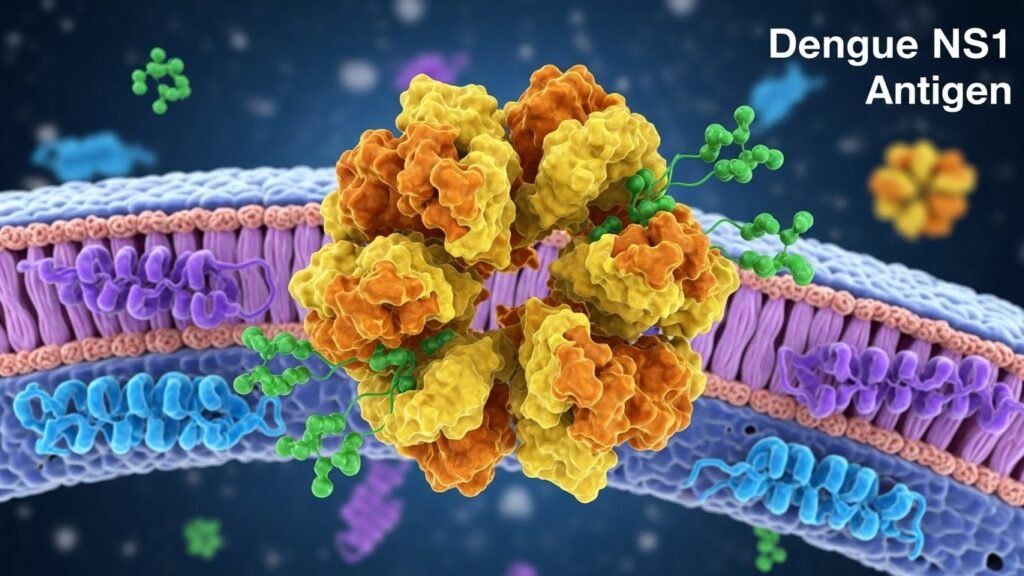
The dengue NS1 antigen test checks for the presence of viral proteins in a person’s blood.Its results can be relied on for a period of 5 days after the appearance of the first symptom only.Detection of dengue infection at an early stage through the test permits close watching and suitable management of the case. The presence of other factors may mean that, even with a negative test for dengue, the patient is still infected.
Getting the Dengue Fever Test Result and What Happens to Your Emotions
Just the thought of waiting to get the dengue fever test result can make you very uncomfortable, and it can totally drain you mentally. People tend to go back and forth between worry and denial. If you get a positive result, clarity comes but so does fear. What many really need is the understanding that most dengue infections heal when proper care is given, and that panic often grows from uncertainty—similar to how confusion around end-of-life care decisions can amplify fear more than the reality itself. There is much less anxiety in knowing the warning signs than in obsessing over the result alon
Dengue Recovery Treatment: Support is the Main Thing
There is no way antivirals work against dengue treatment since they “kill” the virus. Hence, the treatment itself is restoring hydration, resting, and close watching for complications.As for analgesics, painful symptom management stays away from those chemicals which can increase bleeding risk.Surprisingly many people underestimate such treatment that has been described here as very simple, which in fact, requires a lot of discipline and patience.
Why Medical Staff Give Priority to Hydration
Body fluid is such an essential factor when it comes to dengue. Dehydration just makes the symptoms worse and on the other hand, it is also a risk factor during the critical phase. Health practitioners literally depend on either mouth or IV fluids for their patients depending on the severity cases.Drinking more is not the only issue here, it is also the matter of absorbing enough.
The Dengue Dashboards and Public Health Awareness
Dengue dashboards display the count of cases, outbreaks, and the current trends of dengue in real time.Such dashboards assist health systems in planning a faster and more efficient response to outbreaks as well as in optimizing the use of available resources.From the perspective of a person, a dashboard is an early-warning system.As numbers go up, it means one should be more careful rather than get into a panic.
Just by being conscious of the disease can positively influence the outcome of the patient.
Dengue Mosquito Pic and the Importance of Identification
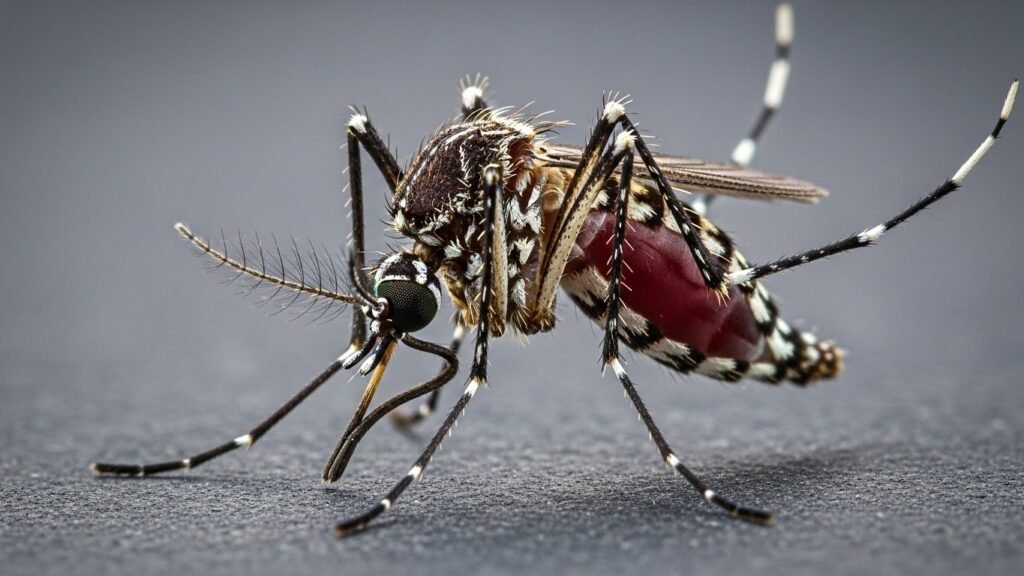
Many people are shocked when they first see a dengue mosquito pic. The mosquito is a small one, with stripes and it mostly bites during daytime called as Aedes mosquito.People’s conduct changes once they know the way it looks.Unlike the mosquito that is almost synonymous with malaria, dengue mosquito carries its virus silently and actively during the daylight hours.
Thus, prevention begins with identification.
Why Symptoms of Dengue Feels More Severe the Second Time
Usually, when people get infected for the second time with a different strain of dengue virus, the immune system tends to have an overreaction that results in more severe symptoms.It is this that explains the case of some persons who have “experienced dengue once and were perfectly fine” but they find it extremely difficult the next time.
Immunological memory has played a role in dengue infections.
Signs of Dengue and the Critical Phase
The critical phase often starts when there is a fall in body temperature. This is indeed the time when fluid can leak from the bloodstream to surrounding tissues.At this point, the patient might be feeling better and this often leads to false assurance from the patient’s side as well as the family members.
However, very close monitoring instead of celebrating is the right thing to do during this open window.
Bleeding Signs People Usually Don’t Pay Attention To
Look around and you will see that bleeding of gums and tiny bruises would hardly get anyone’s attention. But if it is dengue then these are critically important signs for you.These signs indicate the weakening of blood vessel walls along with the drop of platelets. If these bleeding signs are recognized early, escalation to the next level can be prevented.
The Difference between Children and Adults in Dengue Symptoms Presentation
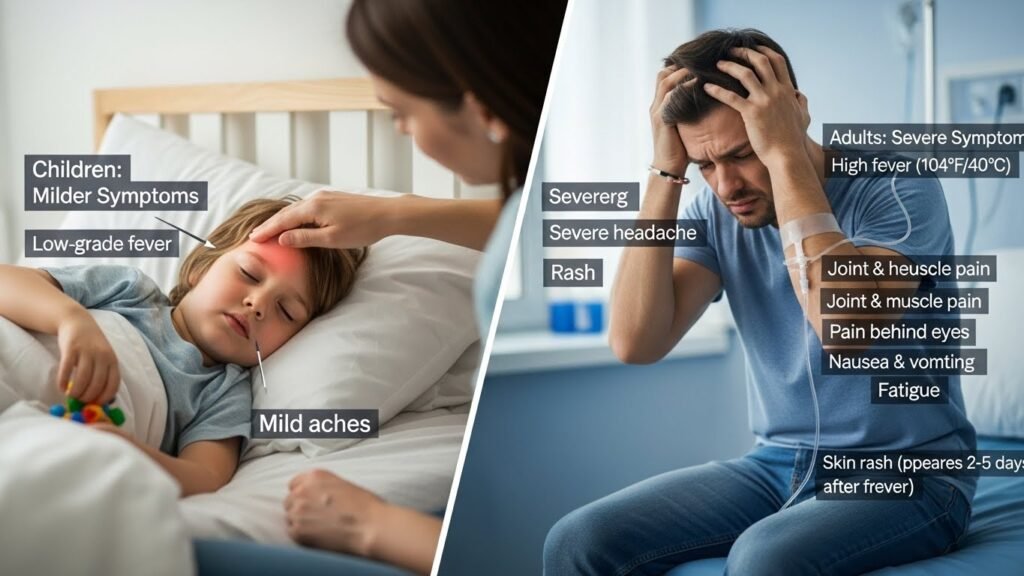
The major problem with kids is usually their inability to communicate their pain to us very well.And so, such manifestations as grumpiness, unwillingness to eat, or odd sleepiness are usually enough to raise the suspicion of the presence of some kind of the problem.Most of the time, parents attribute these symptoms to children being sick as usual.
Thus, looking at them becomes more important than listening to what they say.
When the Fever Ends it Is Still Not the Time to Recover
Weeks after the patient has recovered from dengue, he/she still shows the symptoms of fatigue. It takes time for the energy to come back. Your muscles will be weak. Also, your concentration will be poor. This does not mean, of course, that the illness has continued to be active in the body. On the contrary, it means that the body needs time to be rebuilt. So, here resting doesn’t mean laziness; it means recuperation.
Dengue Symptoms and Mental Strain
Mental health is quite affected by the anxiety of the disease, loneliness, and weakness that lasts.Slow recovery can be very frustrating for many people.One has to come to terms with this. Just like healing, patience too is not a straight line.
When Is Hospital Care Required?
Hospital beds are reserved for cases where either fluid in the body cannot be maintained only by oral intake, or when some of the warning signs have manifested themselves.Being admitted to the hospital should not be viewed as failure but rather as preventive medicine.Those who undergo early treatment manage to live an untroubled existence.
A Simple Snapshot of Dengue Monitoring
| Aspect | What Doctors Watch |
| Fever pattern | Sudden rise, sudden drop |
| Platelets | Trend over time |
| Hydration | Fluid balance |
| Bleeding | Minor to severe |
| Energy | Sudden changes |
The table looks very peaceful.
However, the decisions based on it are not.
Why Early Awareness Is a Game Changer
One recognition of dengue symptoms at early stages means that the person will not be diagnosing himself/herself.They would be able to get medical help in time.A person who gets hold of the warning signs early is almost always safe. Awareness is foresight. Foresight is security.
Transforming Cardinal Habits of Life in a Dengue-Endemic Area
Window screen nets. Cleaning ensures no stagnant water around. Protective attire.Actually, what we call lifestyle habits are no more than tiny habits.These little things that you do daily might not look that important but as you do them more and more over time, their effect starts to add up.Remember, prevention is not a dramatic thing. It is a repetitive thing.
Ways That Dengue Is Not a Seasonal Illness Only
Due to global warming, urban crowding, and travelers, dengue can now pose risks all over the year.Thinking that it is “not dengue season” is tantamount to postponing step onto the ground where there lies an immediate danger.Dengue no longer follows the calendar of the seasons.
Frequently Asked Questions (FAQs)
What are the first symptoms of dengue?
Typically, initial symptoms are high fever, headache, eye pain, tiredness, and muscle aches.
How is dengue diagnosed?
Dengue is diagnosed by blood tests such as the NS1 antigen test and antibody test of blood that are very effective in different periods after onset of illness.
What platelet count is considered dangerous in dengue?
More important than how low platelet counts get is how quickly they drop.
Is it possible to treat dengue at home?
The answer is yes, only mild cases and this has to be done under medical guidance and with close monitoring.
When should I go to the hospital if I have dengue?
If you have warning signs, vomiting that doesn’t stop, or bleeding, see your doctor.