



When people talk about getting hired in Australia, they often focus only on qualifications, certifications, and technical ability. Those things matter, but they are not the whole story.
In reality, many employers place just as much value on your employability skills. These are the practical workplace traits that shape how you communicate, solve problems, work with others, and respond under pressure. They are often called soft skills, but there is nothing soft about them. They are the skills that make people reliable, adaptable, and easier to work with.
Whether you want to improve your chances in skilled employment in Australia or simply become more job-ready, these skills can make a major difference in how employers see you.
What Are Employability Skills?
Employability skills are the everyday abilities that help someone succeed at work beyond technical knowledge alone. They include how you listen, how you speak, how you manage your time, how you work in a team, and how you deal with unexpected problems.
In Australia, these skills are commonly discussed through workplace-readiness programs and employment support services. Current government-backed Employability Skills Training describes them in practical terms such as job search skills, workplace skills, and industry-specific skills.
These are the kinds of abilities employers notice quickly:
- clear communication
- teamwork
- problem-solving
- self-management
- learning mindset
- reliability
- digital confidence
- adaptability
If you already have technical skills, employability skills help you use them effectively. If you are still building technical experience, strong workplace behaviour can still help you get noticed.
Core Employability Skills That Employers Look For
Communication
Communication means more than speaking well in an interview. It includes listening carefully, writing clearly, asking useful questions, and explaining things in a way others can understand.
This matters in almost every field. Even in technical roles, people still need to update managers, work with colleagues, and explain problems to clients. That is also why roles related to customer care and service and business support value communication so highly.
Teamwork
Teamwork is about being dependable, cooperative, and respectful in shared work environments. Employers want people who can contribute without creating unnecessary friction.
In Australia, workplace culture often values collaboration, practical support, and a willingness to help others when workloads shift. Teamwork makes workplaces smoother and more productive.
Problem-Solving
Problem-solving is the ability to think through issues before panicking or passing them on immediately. It shows initiative, maturity, and confidence.
A person who can identify the reason behind a recurring issue, suggest a fix, or at least explain the problem clearly is usually far more valuable than someone who only notices that something went wrong.
Digital Skills
Digital ability is now part of basic employability, not a bonus feature. The Australian Government’s SEE program specifically includes language, literacy, numeracy, and digital skills training for eligible participants, and Workforce Australia also promotes digital readiness through employment support pathways.
That means modern employability includes being comfortable with:
- email and workplace messaging
- online forms and portals
- collaboration tools
- digital safety awareness
- basic data handling
- online job applications
This is especially important in a labour market where many jobs involve platforms, software, and cloud-based systems such as AWS Amazon Web.
Why Employability Skills Matter in Australia
Employers are not only hiring a qualification. They are hiring a person they can trust under real working conditions.
You might have the right degree, but if you cannot communicate clearly, adapt to change, or work well in a team, it becomes harder to succeed in the long term. This is especially relevant for people trying to enter skilled roles, because technical shortages may help open the door, but employability skills often help you stay in the job.
The Australian Government still provides formal support through programs like:
- Employability Skills Training (EST), which helps eligible participants build workplace, job search, and industry-specific skills.
- Skills for Education and Employment (SEE), which offers free training in language, literacy, numeracy, and digital skills for eligible Australians.
The fact that these programs exist shows how seriously job-readiness is taken.
Support Programs That Can Help You
Employability Skills Training (EST)
EST is designed to help eligible people become more competitive in the job market. Official government pages describe it as support for developing the workplace skills employers want, exploring career options, and building job-search and industry-specific skills. Eligibility currently includes being aged 15 or over and registered with certain employment services such as Workforce Australia or related pathways.
What EST can help with
- job-search confidence
- interview preparation
- workplace expectations
- communication and teamwork
- awareness of different industries
Skills for Education and Employment (SEE)
SEE is a free Australian Government program for eligible people who need stronger foundation skills. It supports reading, writing, maths, basic computer skills, and, for some participants, English language improvement. The program is delivered nationally across metropolitan, regional, and remote Australia.
What SEE can help with
- reading and understanding workplace documents
- improving written communication
- strengthening numeracy
- building digital confidence
- preparing for further study or work
If someone feels behind in the basics, SEE can be a strong first step.
The Growing Importance of Adaptability
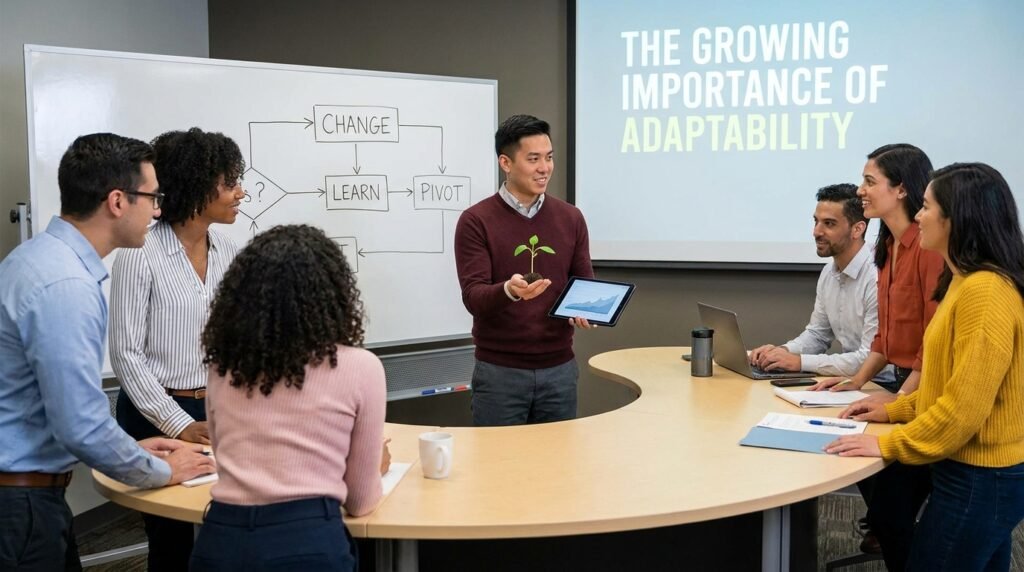
One of the most valuable employability skills today is adaptability.
Workplaces change fast. Teams switch tools, processes evolve, software gets replaced, and responsibilities shift. People who can adjust without shutting down are often far more valuable than people who only work well when everything stays familiar.
This matters even more as businesses adopt automation, AI, and new digital workflows. That is one reason this topic connects naturally with AI and automation and broader workplace change.
Adaptability includes:
- learning new systems quickly
- staying calm during change
- asking good questions
- letting go of outdated habits
- finding solutions instead of resisting everything new
Adaptability is not about liking every change. It is about handling change well enough to keep moving.
Digital Literacy Is No Longer Optional
A few years ago, digital literacy often meant basic office software. Today, it means being able to function in a connected workplace.
That includes:
- using digital communication tools
- understanding online collaboration
- handling files and information securely
- navigating platforms and portals
- working with data at a basic level
People do not need to become technical experts in everything. But they do need enough confidence to work effectively in digital environments. This is even more relevant in fields connected to software engineering, managed IT services, and digital transformation agency work.
Employability Skills and Skilled Employment in Australia
When people think about skilled employment in Australia, they usually think about the occupation list first. That makes sense, because visa pathways and labour shortages often depend on whether a role appears on an official skilled occupation list.
Australia’s Department of Home Affairs publishes the skilled occupation list, and Jobs and Skills Australia also provides occupation and shortage data that help explain where demand exists.
But getting onto the list is only part of the picture. Keeping a role, performing well, and progressing in the workplace depends heavily on employability skills.
How this looks in real sectors
Healthcare
Nurses, carers, and medical staff need empathy, resilience, and calm communication alongside technical knowledge.
ICT and tech
Technical professionals still need to explain complex issues clearly. That makes communication just as important as technical problem-solving.
Trades
Reliability, punctuality, and time management matter a lot. Employers notice quickly whether someone does what they say they will do.
Business and service roles
People working in administration, support, and service environments need professionalism, teamwork, and strong communication every day.
Why Employers Care About Culture Fit
Culture fit is sometimes misunderstood. In a healthy sense, it usually means employers want to know whether you can work respectfully with other people, handle pressure, and contribute positively to the team.
They want to know:
- can you be trusted?
- can you stay professional under stress?
- can you communicate without creating confusion?
- can you learn from feedback?
- can others rely on you?
That is why employability skills often influence hiring decisions even when technical experience looks similar between candidates.
How to Build Employability Skills
Nobody is born job-ready. These skills develop with practice.
Ways to improve them
- ask for feedback after interviews
- practice speaking clearly and confidently
- improve your email and written communication
- learn basic workplace software
- take part in training or support programs
- reflect on how you respond to pressure
- build habits around punctuality and follow-through
If you need a starting point, government-backed programs like EST and SEE are designed for exactly that purpose.
Final Thoughts
Technical ability can help you qualify for a role, but employability skills often shape whether you succeed in it.
In Australia, employers want people who can communicate, adapt, solve problems, work with others, and keep learning. These are not extras. They are core workplace strengths.
So instead of treating employability skills as secondary, treat them as essential. Build them steadily, use the support available, and keep improving one step at a time.
That is often what makes someone not just employable, but dependable.
FAQs
What are employability skills?
Employability skills are the practical workplace abilities that help someone succeed in a job, such as communication, teamwork, adaptability, problem-solving, and digital confidence.
Are employability skills the same as soft skills?
They are closely related. “Soft skills” is the more casual term, while “employability skills” is commonly used in formal training and employment settings.
What is the SEE program in Australia?
The Skills for Education and Employment program is a free Australian Government program that helps eligible people improve language, literacy, numeracy, and digital skills.
What is EST in Australia?
Employability Skills Training is a government-supported program that helps eligible participants build job-search, workplace, and industry-related skills.
How do I check if my occupation is on Australia’s skilled occupation list?
Check the official skilled occupation list on the Department of Home Affairs website and related labour-market data from Jobs and Skills Australia.

