


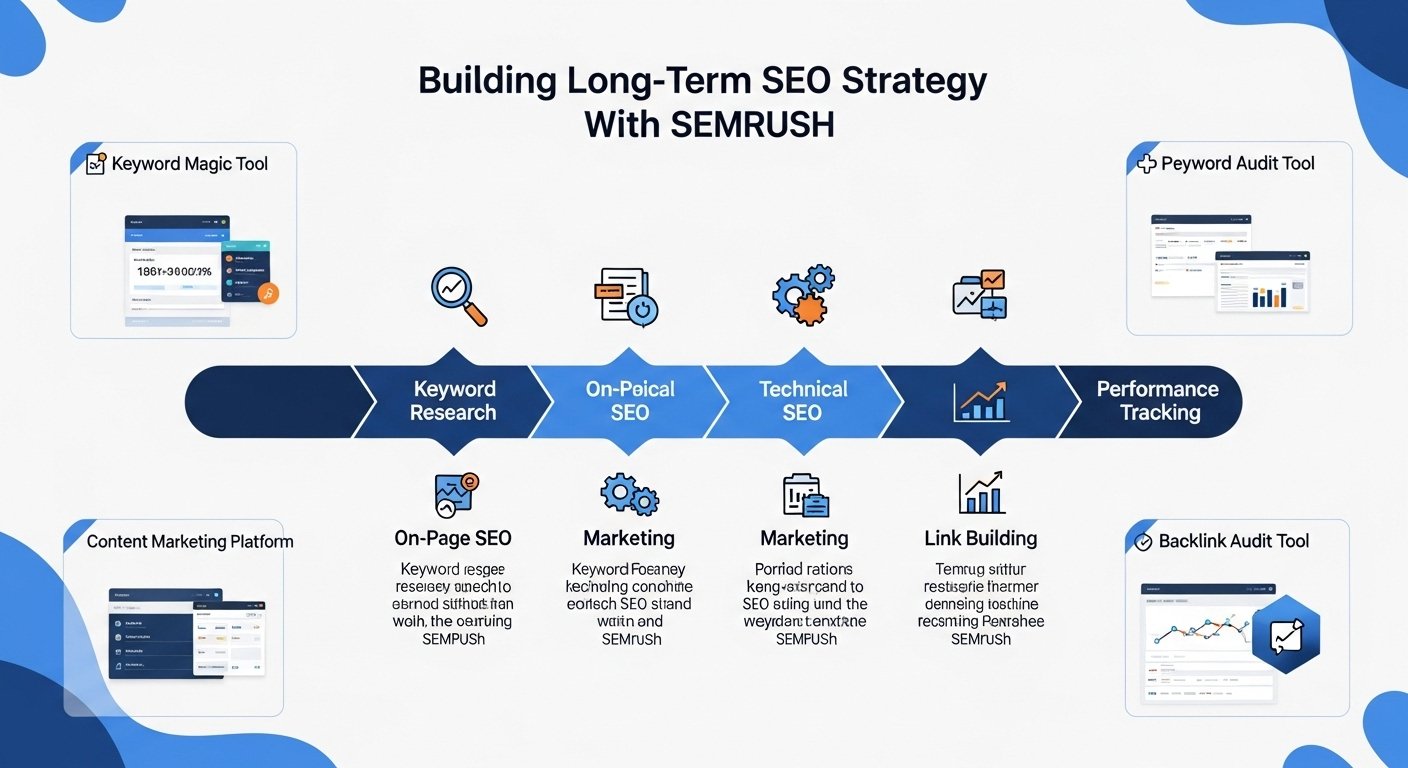

Search engine optimization is no longer about guessing keywords and hoping pages rank. Modern SEO requires real data, technical analysis, competitor research, and continuous optimization. That is where Semrush becomes one of the most powerful tools for marketers, bloggers, agencies, and businesses.
Whether you are trying to grow traffic, improve rankings, or understand why competitors outrank your website, Semrush gives you the insights needed to make smarter decisions.
If you are new to SEO, you should also learn how tools like Google Search Console work alongside Semrush because combining both platforms helps you track real keyword performance and indexing issues more accurately.
What Is Semrush?
Semrush is an all-in-one SEO and digital marketing platform designed to help users improve online visibility. It offers tools for:
- Keyword research
- Competitor analysis
- Site audits
- Rank tracking
- Backlink analysis
- PPC research
- Content optimization
- Technical SEO monitoring
After logging in, users gain access to a dashboard where they can monitor projects, track rankings, audit websites, and analyze competitors from one place.
Unlike simple keyword tools, Semrush provides deeper SEO insights that help websites build long-term organic traffic strategies.
How to Log In to Semrush
Getting started with Semrush is simple.
Step-by-Step Semrush Login Process
- Visit the official Semrush website
- Click the Log In button
- Enter your email and password
- Complete two-factor authentication if enabled
- Access your SEO dashboard
Once logged in, you can create projects, track keywords, audit your website, and monitor SEO growth.
However, logging in is only the beginning. The real value comes from learning how to use the platform effectively.
Why Semrush Is Important for SEO
SEO has become increasingly competitive in Australia and globally. Google now prioritizes content quality, user experience, page speed, semantic relevance, and authority.
Semrush helps website owners understand all of these ranking factors using real-time SEO data.
For example, if your content has technical issues like duplicate titles, missing metadata, broken links, or slow-loading pages, Semrush can identify them immediately. Tools like Screaming Frog can also help with advanced crawling and technical SEO audits, making it a great companion tool.
Semrush also helps identify keyword opportunities your competitors are already ranking for, allowing you to create stronger and more targeted content.
1. Keyword Research with Semrush

Keyword research is one of the most important parts of SEO because it determines what users are searching for online.
Semrush provides detailed keyword data including:
- Monthly search volume
- Keyword difficulty
- Search intent
- CPC value
- SERP competition
- Trend analysis
Instead of targeting random keywords, you can identify terms that bring realistic ranking opportunities.
For example, many beginners make the mistake of targeting broad keywords with massive competition. Semrush helps you discover long-tail keywords with better ranking potential and higher conversion intent.
If you want to improve your SEO content strategy further, tools mentioned in our guide on best SEO reporting tools can help monitor keyword growth and ranking improvements.
2. Running a Site Audit
Technical SEO problems can prevent pages from ranking even if the content is excellent.
The Semrush Site Audit tool scans your website for issues such as:
- Broken links
- Duplicate content
- Missing titles
- Missing meta descriptions
- Slow page speed
- Crawlability issues
- Internal linking errors
- Redirect problems
Many websites unknowingly lose rankings because of technical SEO mistakes. Regular audits help identify and fix these problems before they affect organic traffic.
If your website contains duplicate pages or weak content, Google may reduce visibility in search results. This is why structured SEO audits are critical for long-term ranking stability.
3. Competitor Analysis
One of the strongest features inside Semrush is competitor research.
You can enter a competitor domain and instantly analyze:
- Their top-performing pages
- Organic traffic estimates
- Ranking keywords
- Backlink profiles
- Paid advertising strategies
- Content gaps
This allows you to understand why competitors rank higher and where new opportunities exist.
For example, if a competitor ranks for hundreds of valuable keywords your website does not target, you can build optimized content around those missing opportunities.
Businesses looking for deeper SEO growth often combine competitor research with professional search optimization services to scale rankings faster.
4. Tracking Keyword Rankings
SEO rankings constantly change because Google updates algorithms frequently.
The Position Tracking feature inside Semrush allows users to monitor:
- Daily keyword rankings
- Ranking increases and drops
- Competitor movement
- Featured snippets
- Local SEO visibility
- Mobile and desktop performance
For Australian websites, it is important to set Australia as the target location when tracking keywords. This provides more accurate ranking data for local search results.
Tracking rankings helps businesses measure whether SEO improvements are actually working.
5. Backlink Analysis and Link Building
Backlinks remain one of Google’s strongest ranking signals.
Semrush helps analyze backlink profiles by showing:
- Referring domains
- Authority scores
- Toxic backlinks
- Lost links
- New backlinks
- Competitor backlink sources
This helps websites identify harmful backlinks while discovering new opportunities for authority building.
If your website has toxic links pointing to it, rankings may suffer. Semrush allows you to identify and disavow suspicious backlinks before they damage SEO performance.
6. Content Optimization Tools
Creating content without optimization often leads to poor rankings.
Semrush includes SEO writing tools that analyze:
- Readability
- Keyword usage
- Semantic relevance
- Content originality
- Tone consistency
- Competitor comparison
This helps writers produce content that is more aligned with Google’s ranking expectations.
You can also combine these insights with modern AI tools to speed up content research and brainstorming while still maintaining human-quality writing.
7. Using Semrush for Content Planning
Content planning becomes easier when you understand what users are actually searching for.
Semrush helps identify:
- Trending topics
- Seasonal keywords
- Search intent
- Related keyword clusters
- Question-based searches
Instead of publishing random articles, you can build topical authority around specific niches.
For example, if you run a technology blog, you can create connected content around AI, SEO, automation, and machine learning while internally linking related articles together.
This strategy improves both user experience and SEO relevance.
Common SEO Mistakes Beginners Make with Semrush
Many beginners misuse SEO tools because they focus only on traffic numbers.
Some common mistakes include:
Ignoring Search Intent
Ranking is difficult if content does not match what users actually want.
Targeting Only High-Volume Keywords
Large keywords are usually highly competitive and difficult to rank for.
Publishing Thin Content
Google prefers detailed, helpful, and structured content.
Ignoring Technical SEO
Broken links, duplicate pages, and slow websites can damage rankings.
Weak Internal Linking
Internal links help distribute authority across pages and improve crawlability.
For example, connecting related pages like Prompt Engineering, Generative AI, and What Is Machine Learning creates stronger topical relevance.
Semrush vs Other SEO Tools
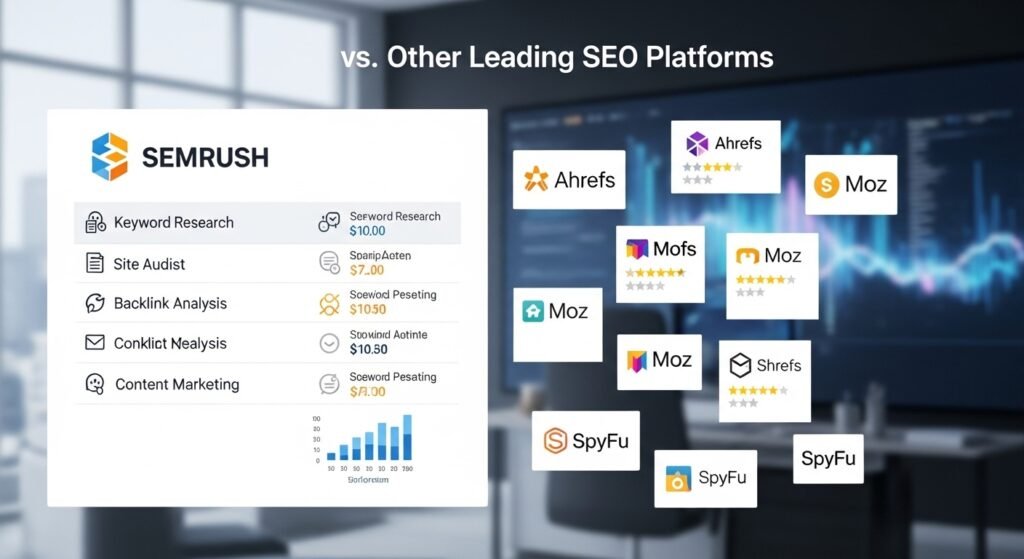
Several SEO platforms exist today, but each has different strengths.
Semrush
Best all-in-one SEO platform for keyword research, audits, tracking, and competitor analysis.
Ahrefs
Strong backlink database and competitor link analysis.
Moz
Beginner-friendly interface with simpler SEO tools.
Ubersuggest
Affordable but limited compared to enterprise SEO platforms.
Semrush stands out because it combines multiple SEO functions into one platform, making it useful for bloggers, agencies, and businesses alike.
Is Semrush Worth It in 2026?
For serious SEO growth, Semrush remains one of the best investments available.
It helps users:
- Increase organic traffic
- Identify ranking opportunities
- Monitor technical SEO health
- Improve content quality
- Study competitors
- Build stronger SEO strategies
The longer you use SEO data consistently, the easier it becomes to make informed optimization decisions.
Final Verdict
Semrush is far more than a simple login portal. It is a complete SEO intelligence platform designed to help websites improve visibility, traffic, and rankings through data-driven decisions.
From keyword research and audits to backlinks and competitor tracking, the platform gives businesses the tools needed to compete in modern search results.
When combined with proper technical SEO, quality content, and strong internal linking, Semrush becomes one of the most valuable tools for long-term organic growth.
FAQs
Is Semrush free to use?
Semrush offers a limited free version, but advanced features require a paid subscription.
Is Semrush beginner friendly?
Yes. Beginners can start with keyword research, site audits, and rank tracking before moving into advanced SEO analysis.
Does Semrush help with local SEO?
Yes. Users can track rankings based on specific countries and locations, including Australia.
Can Semrush improve rankings directly?
No SEO tool directly improves rankings. Semrush provides insights and recommendations that help users optimize websites more effectively.
Which is better, Semrush or Ahrefs?
Semrush is stronger as an all-in-one SEO platform, while Ahrefs is especially strong for backlink analysis.