


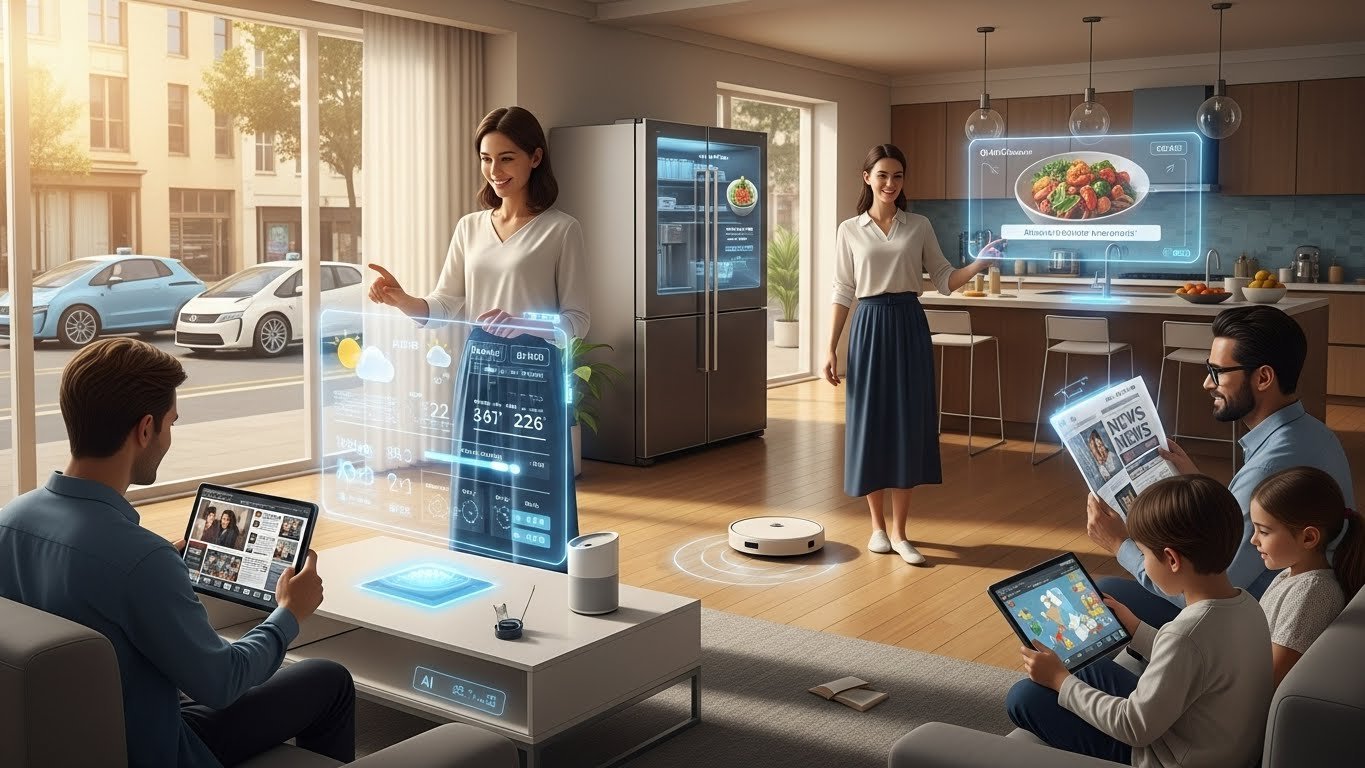

Artificial intelligence may sound like a complicated technology topic, but it is already part of everyday life. Most people use AI without noticing it. It helps phones suggest replies, maps choose faster routes, email apps filter spam, and streaming platforms recommend what to watch next.
But AI becomes even more powerful when it connects with smart devices and sensors. This combination is often called AIoT, which means Artificial Intelligence of Things. In simple words, AIoT combines artificial intelligence with the Internet of Things, or IoT. It allows connected devices to collect data, learn from it, and respond more intelligently.
This is why AIoT matters. It does not only make one device smarter. It helps many connected devices work together.
What Is AIoT?
AIoT means the combination of artificial intelligence and IoT. IoT is the network of physical devices that collect and share data through sensors, software, and internet connectivity. AI helps those devices understand patterns, make predictions, and support better decisions.
For example, a normal security camera records video. An AI-powered smart camera can detect movement, recognise the difference between a person and a pet, and send an alert only when needed.
That is the difference. IoT collects the data. AI understands the data. Together, they create smarter connected systems.
For a beginner, the easiest way to understand AIoT is this: smart devices do not just connect anymore; they can also react, learn, and improve over time.
What Is Artificial Intelligence With Daily Examples?
Artificial intelligence is technology that allows machines to perform tasks that usually need human-like thinking, such as learning, recognising patterns, solving problems, and making decisions. IBM describes AI as technology that enables computers and machines to simulate human learning, problem-solving, decision-making, and related abilities.
You already see AI in daily life through:
- Email spam filters
- Google Maps route suggestions
- Voice assistants
- Product recommendations
- Face unlock on phones
- Auto-correct and predictive text
- Smart photo sorting
- Customer support chatbots
For a deeper beginner guide, you can also read what is artificial intelligence.
How AI Works in Smart Devices
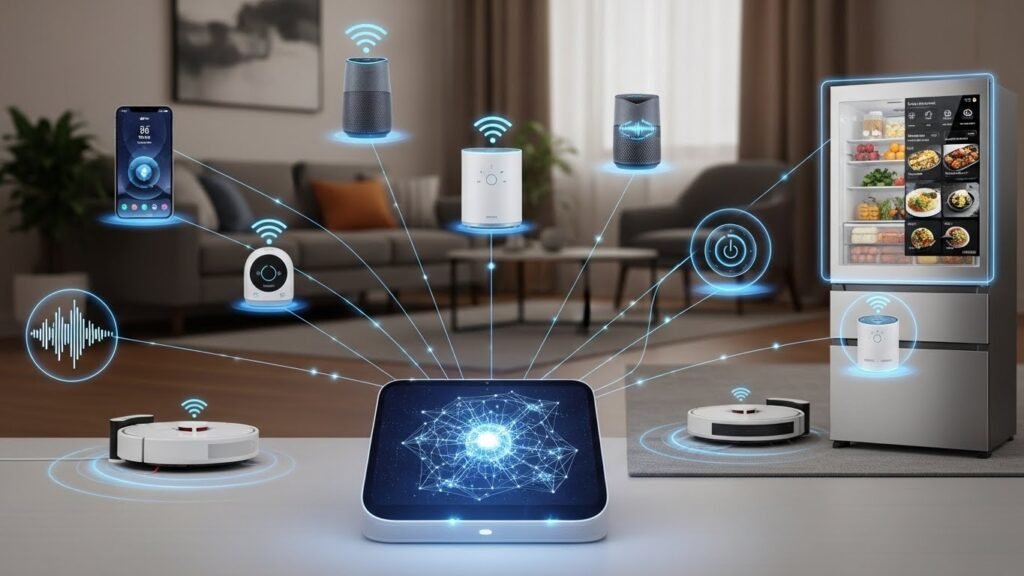
AI in smart devices works by using data from sensors and then applying models to detect patterns. The device may collect information about movement, sound, temperature, location, energy usage, or user behavior.
For example, a smart thermostat can learn when people are usually home and adjust temperature automatically. A smart washing machine may adjust its cycle based on load size. A robot vacuum may map rooms and clean more efficiently over time.
These devices do not “think” like humans. They follow trained models and rules based on data. Still, the result can feel intelligent because the device responds to the situation.
AI in Everyday Life Without the Buzzwords
Many people do not call it AI when they use it. They call it convenience.
When Netflix recommends a show, that is AI. When your phone groups photos by face or location, that is AI. When Gmail suggests the next few words in your sentence, that is AI. When an online store recommends products based on your browsing history, that is also AI.
These examples may look small, but they save time. They reduce effort. They make digital tools feel more personal.
AI is not always dramatic. Most of the time, it works quietly in the background.
Artificial Intelligence in Internet of Things Networks
Artificial intelligence in Internet of Things networks helps connected devices work together instead of acting alone. This is where AIoT becomes more useful.
A smart traffic system is a good example. One traffic light can only manage one road. But if many traffic sensors and traffic lights share data, the system can respond to congestion more intelligently.
The same idea applies to buildings, factories, farms, hospitals, and energy systems. Devices collect data, AI studies the pattern, and the system adjusts.
This type of connected intelligence is also part of larger digital transformation agency work, where businesses use technology to improve operations and decision-making.
Applications of AI in Industry
AIoT is very useful in industries because it can reduce waste, improve safety, and prevent problems before they become expensive.
In manufacturing, sensors can track machine health. AI can study vibration, temperature, or usage patterns and predict when a machine may fail. This is called predictive maintenance.
In agriculture, AIoT can help monitor soil moisture, crop health, and weather conditions. In logistics, it can support route planning and delivery tracking. In retail, it can help forecast demand and manage stock.
These applications may not look exciting to the average person, but they help companies save time, money, and resources.
AI in Transportation and Mobility
AI is already changing transportation systems. It can help predict congestion, manage traffic flow, improve public transport schedules, and support route planning.
Navigation apps are a simple daily example. They collect road and traffic data, then suggest better routes. More advanced systems can help cities manage traffic lights, parking, and public transport movement.
This connects strongly with modern transportation technology, where data, sensors, automation, and AI work together to improve movement.
The goal is not always perfection. Sometimes, the goal is fewer delays, fewer errors, and smoother travel over time.
AI in Healthcare Monitoring
Healthcare AI is usually designed to support doctors and medical teams, not replace them.
AI can help detect patterns in scans, monitor patient data, identify risk signals, and support early alerts. For example, wearable health devices can track heart rate, sleep, movement, and other signals. AI can then help identify unusual changes.
However, healthcare is a high-trust area. AI results should be reviewed by trained professionals. The system may support decision-making, but human supervision remains important.
AI in Customer Service
Customer service chatbots are one of the most common uses of AI. They can answer basic questions, route requests, collect details, and send difficult cases to human agents.
When designed well, AI chatbots save time for both customers and support teams. When designed poorly, they can frustrate users.
That is why AI should support better customer care and service, not make customers feel ignored. The best systems know when to automate and when to involve a real person.
AIoT and Machine Learning
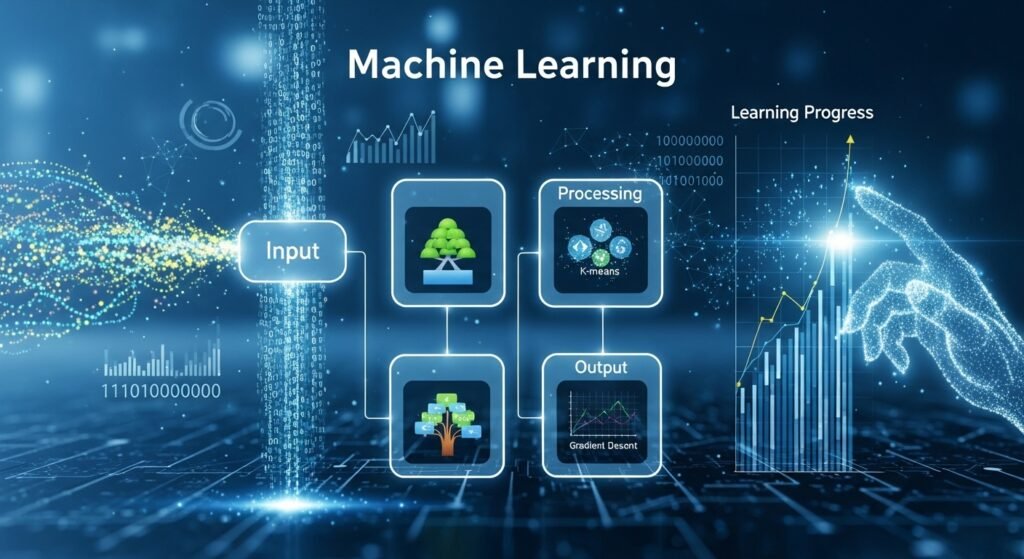
AIoT depends heavily on data and machine learning. Machine learning helps systems find patterns in data and improve responses over time.
For example, a smart factory system may learn which machine signals usually appear before a breakdown. A smart building may learn energy usage patterns and adjust lighting or cooling automatically.
The more useful data the system receives, the better it can become. But if the data is poor, incomplete, or biased, the results can also be poor.
Risks of AI in Connected Systems
AIoT has benefits, but it also creates risks. Connected devices collect a lot of data. That can raise privacy and security concerns.
Common risks include:
- Data misuse
- Weak device security
- Biased AI decisions
- Overdependence on automation
- Lack of transparency
- Poor human oversight
This is why AI should not be used blindly. People must understand what data is collected, how decisions are made, and who is responsible when something goes wrong.
Human judgment still matters. AI can support decisions, but it should not remove accountability.
How to Use AI More Safely
Most people do not need technical skills to use AI safely. They just need awareness.
Use AI tools carefully. Do not share private information unless you trust the platform. Review AI answers before acting on them. Check important facts. Understand that AI can make mistakes.
If you are new to AI, start with simple tools like writing assistants, search assistants, or productivity apps. You can explore useful options in this guide to AI tools and then move toward more advanced uses like generative AI.
Final Thoughts
AIoT is not about robots taking over the world. It is about connected devices becoming more useful through data and artificial intelligence.
Smart homes, transport systems, healthcare monitoring, factories, farms, and customer service platforms are already using AI in quiet but powerful ways. Most of the impact happens in the background. Devices collect data. AI finds patterns. Systems respond faster.
The key is balance. AI can improve decisions, reduce errors, and save time, but it still needs human oversight. The smartest future is not one where machines replace people. It is one where people use intelligent systems responsibly.
FAQs
What is AIoT?
AIoT means Artificial Intelligence of Things. It combines AI with IoT devices so connected systems can collect data, analyse it, and respond more intelligently.
How is AI used in everyday life?
AI is used in maps, search engines, email filters, streaming recommendations, smart home devices, voice assistants, and online shopping suggestions.
What is artificial intelligence in Internet of Things?
It means using AI inside connected IoT networks so devices can understand data, detect patterns, and support automated decisions.
Do I need technical skills to use AI?
No. Most AI products are built for normal users. You only need to give clear instructions and review the results carefully.
Is AI replacing human decision-making?
AI supports decision-making, but it should not fully replace human judgment, especially in healthcare, finance, safety, and privacy-related areas.
What are examples of AIoT?
Examples include smart cameras, smart thermostats, traffic sensors, predictive maintenance systems, wearable health devices, and smart factory equipment.