



Finding the best AI writing tools in 2026 is harder than it looks. Search the topic and you will usually find the same recycled lists, the same vendor descriptions, and the same vague promise that every tool is “powerful” or “game-changing.”
This guide is different.
Instead of repeating homepage features, I tested 12 AI writing tools using the same content brief. I compared their output quality, editing time, SEO usefulness, cost, usability, and AI detection performance. The goal was simple: find out which tools actually help create publishable content, not just fast drafts.
If you want a broader look beyond writing tools, you can also explore our guide to the best AI tools in 2026.
Editorial note: This article was reviewed by TheArticleSpot’s editorial team for clarity, source accuracy, and relevance. AI tools may have supported outlining, editing, formatting, or research organization, but final review and publication decisions are handled by a human editor. Tool features, pricing, and availability can change, so readers should verify important details on the official provider website before making a final decision.
The 30-Second Verdict
If you want the best raw writing quality, use Claude or ChatGPT. If you want SEO structure, pair them with Surfer or Frase. If you want budget-friendly output, Rytr and Writesonic are still useful. If you run ecommerce, Hypotenuse or Describely make more sense than general writing tools.
| Pick | Tool | Why It Stands Out |
|---|---|---|
| Overall winner | Claude or ChatGPT + Surfer | Best writing quality plus real SEO optimization |
| Best for SEO teams | Surfer + Frase | Strong SERP analysis and content briefs |
| Best budget pick | Rytr or Writesonic | Affordable and useful for short-form content |
| Best for ecommerce | Hypotenuse or Describely | Better for product descriptions at scale |
| Best for teams | Jasper | Brand voice and workflow features |
| Best free assistant | Grammarly or QuillBot | Great for polishing and rewriting |
The biggest lesson from testing was clear: a stack beats a single tool. One tool may draft well, another may optimize better, and another may polish the final version.
How I Tested These AI Writing Tools
I gave every tool the same 1,200-word article brief for a mid-competition keyword. Each tool had the same topic, target audience, structure, tone, and required talking points.
I then judged each output using five practical signals:
- Writing quality
- Editing time required
- SEO usefulness
- AI detection performance
- True cost per publishable article
AI detection was included, but it was not the only factor. A detector score alone does not make content good. I placed more weight on accuracy, usefulness, readability, structure, search intent match, and how much human editing was needed before publishing.
This matters because Google does not reward content just because it sounds “human.” It rewards content that is helpful, accurate, original, and useful to readers.
If you are new to AI prompting, our prompt engineering guide explains how better prompts lead to better outputs.
Why This List Is Different
Most “best AI writing tools” posts compare tools by copying features from vendor websites. That does not tell you how the tools perform when you actually try to publish something.
This review focuses on real publishing value.
I looked at whether each tool could:
- Follow a brief properly
- Match search intent
- Produce natural writing
- Avoid generic filler
- Support SEO structure
- Reduce editing time
- Create content worth publishing
A tool that produces 1,500 words in one click is not useful if the draft needs an hour of editing. The real question is not “Which AI writer is fastest?” It is “Which AI writer gives you the best publishable result?”
Quick Comparison of the Best AI Writing Tools
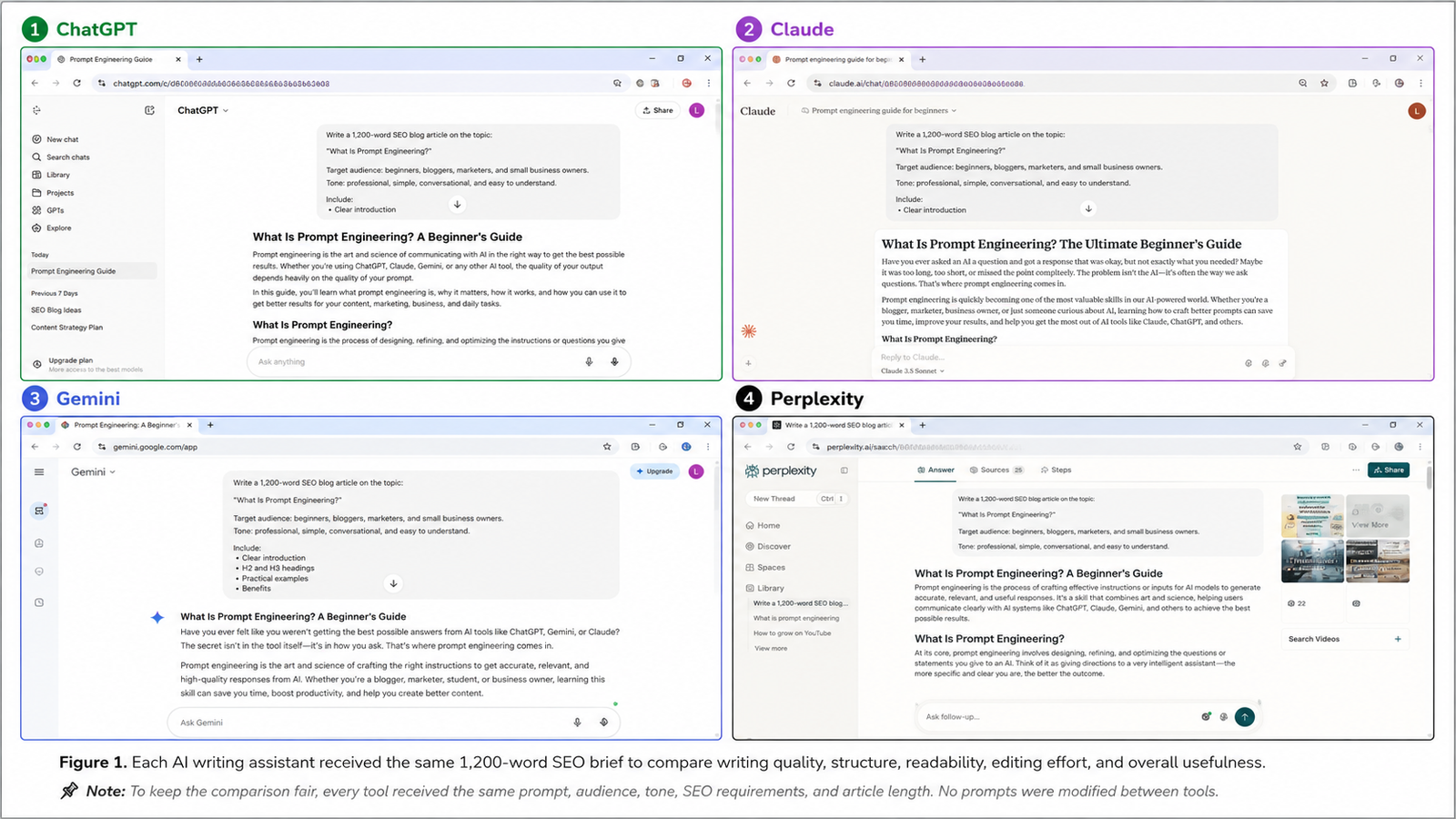
| Tool | Best For | Free Plan | Editing Needed | Best Use Case |
| ChatGPT | General writing | Yes | Low–Medium | Blogs, outlines, ideas |
| Claude | Long-form writing | Yes | Low | Articles, analysis, tone |
| Surfer | SEO optimization | Trial/Limited | Medium | Ranking-focused content |
| Frase | SEO briefs | Limited | Medium | Content planning |
| Jasper | Teams and brand voice | No/Trial | Medium | Marketing teams |
| Writesonic | Budget content | Yes | Medium | Short-form and blogs |
| Rytr | Low-cost writing | Yes | Medium–High | Simple content |
| Hypotenuse | Ecommerce | Trial | Low–Medium | Product descriptions |
| Describely | Ecommerce copy | Trial | Low | Catalogue content |
| Sudowrite | Creative writing | Trial | Medium | Fiction and storytelling |
| Grammarly | Editing | Yes | Low | Grammar and clarity |
| QuillBot | Paraphrasing | Yes | Medium | Rewriting and summaries |
AI Detection Was Only One Signal
AI detection matters because many publishers, clients, and editors still check content before approval. But it should not dominate the entire conversation.
A high AI detection pass rate does not automatically mean the content is helpful. A draft can pass a detector and still be boring, inaccurate, thin, or useless.
In testing, the best results came from well-prompted tools followed by human editing. Raw one-click content was the most likely to feel generic and require heavy rewriting.
A better standard is this:
Does the article answer the reader’s question better than competing pages?
That matters far more than chasing a perfect detector score. For a deeper understanding of how AI writing works, read our guide on LLMs.
Does AI Content Still Rank in 2026?
Yes, AI-assisted content can still rank in 2026 when it is useful, accurate, edited, and experience-based.
The problem is not AI content itself. The problem is low-value content published at scale without human judgment.
AI writing works best when you use it to:
- Build outlines
- Generate first drafts
- Improve structure
- Create title ideas
- Summarise research
- Draft FAQs
- Speed up repetitive writing
It performs worst when users publish raw drafts without fact-checking, editing, examples, or unique insight.
If you are using AI for SEO, combine it with tools like the best SEO reporting tools so you can track whether the content actually performs.
Best AI Writing Tools Reviewed
ChatGPT: Best All-Round AI Writing Assistant
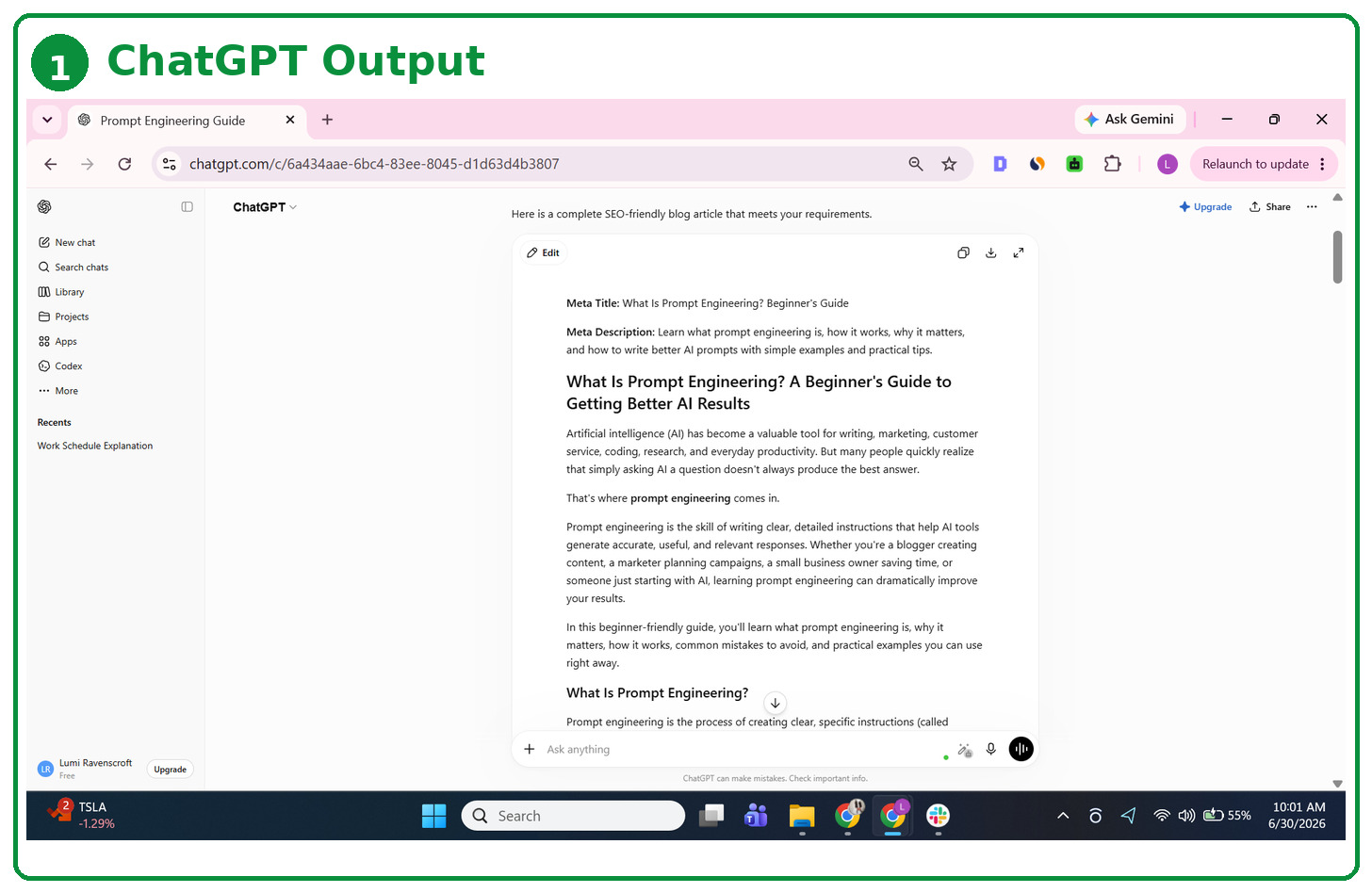
ChatGPT remains one of the most flexible AI writing tools available. It can create outlines, blog drafts, meta descriptions, emails, social captions, product descriptions, and content briefs.
Its biggest strength is flexibility. With the right prompt, it can adapt to different tones, audiences, and formats. It is also useful for brainstorming, rewriting, and simplifying complex ideas.
ChatGPT Scorecard
| Area | Rating |
| Output quality | 9/10 |
| Editing time | 8/10 |
| SEO usefulness | 7/10 |
| Value | 9/10 |
| Ease of use | 9/10 |
Best For
ChatGPT is best for bloggers, freelancers, marketers, students, and business owners who want one general AI writing assistant.
Avoid If
Avoid relying on ChatGPT alone if you need advanced SERP scoring or technical SEO optimization. Pair it with a dedicated SEO tool for ranking-focused content.
For deeper comparisons, see Claude vs ChatGPT and DeepSeek vs ChatGPT.
Claude: Best for Long-Form Writing and Natural Tone
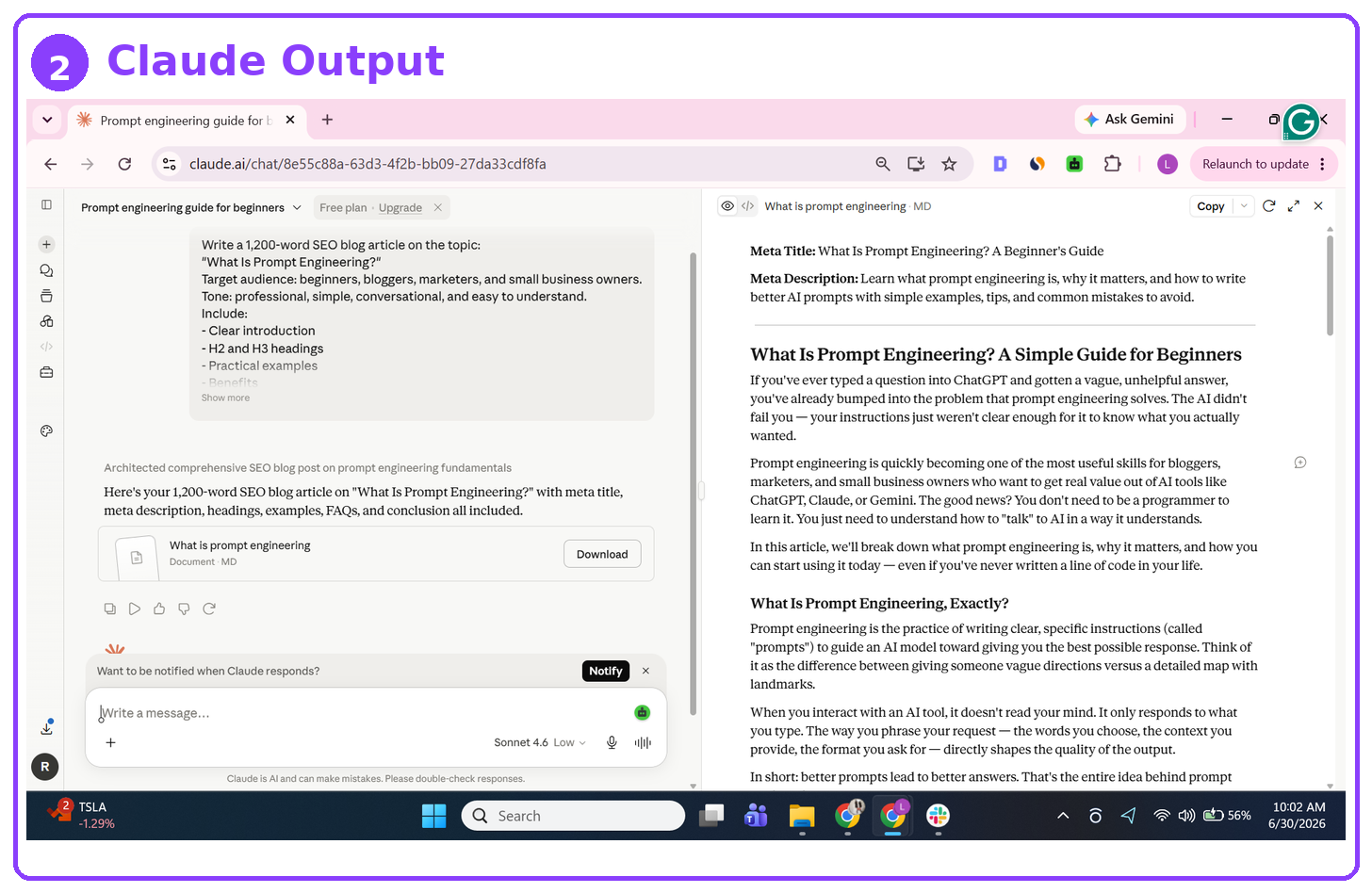
Claude produced some of the most natural long-form writing in testing. It handled tone, structure, and nuance especially well.
Compared with many template-based tools, Claude felt less robotic and needed less rewriting. It was particularly strong for articles, guides, analysis, and content where flow matters.
Claude Scorecard
| Area | Rating |
| Output quality | 9.5/10 |
| Editing time | 9/10 |
| SEO usefulness | 7/10 |
| Value | 9/10 |
| Ease of use | 8.5/10 |
Best For
Claude is best for long-form blog content, analysis, thought leadership, and writing that needs a human-like tone.
Avoid If
Avoid using Claude as your only SEO tool. It writes well, but it does not replace SERP analysis or keyword research.
Surfer: Best for SEO Optimization
Surfer is not just an AI writing tool. It is an SEO content optimization platform that compares your content against top-ranking pages.
It helps with keyword coverage, content structure, headings, word count, NLP terms, and optimization scoring. This makes it useful for teams that care about rankings, not just writing speed.
Surfer Scorecard
| Area | Rating |
| Output quality | 7.5/10 |
| Editing time | 7/10 |
| SEO usefulness | 9.5/10 |
| Value | 8/10 |
| Ease of use | 8/10 |
Best For
Surfer is best for SEO writers, agencies, affiliate sites, and businesses that publish ranking-focused content.
Avoid If
Avoid Surfer if you only need casual writing or low-volume content. It is more useful when SEO traffic is the goal.
Frase: Best for Content Briefs and SEO Planning
Frase is strong for content research and article briefs. It helps identify what top-ranking pages cover and turns that into a structured writing plan.
In testing, Frase was better at planning than producing polished final copy. Its biggest value comes before writing begins.
Frase Scorecard
| Area | Rating |
| Output quality | 7/10 |
| Editing time | 7/10 |
| SEO usefulness | 9/10 |
| Value | 8/10 |
| Ease of use | 8/10 |
Best For
Frase is best for SEO teams, content strategists, and writers who need better briefs before drafting.
Avoid If
Avoid it if you want a simple one-click AI writer with minimal setup.
Jasper: Best for Marketing Teams
Jasper is built for teams that need brand voice, workflows, templates, and repeatable marketing content.
It is not the cheapest tool, but it is useful for businesses that produce content across campaigns, emails, landing pages, and social media.
Jasper Scorecard
| Area | Rating |
| Output quality | 8/10 |
| Editing time | 7/10 |
| SEO usefulness | 7/10 |
| Value | 7/10 |
| Ease of use | 8/10 |
Best For
Jasper is best for marketing teams, agencies, and companies that want brand voice consistency.
Avoid If
Avoid Jasper if you are a solo blogger on a tight budget. Claude or ChatGPT may be better value.
Writesonic: Best Budget AI Writing Tool
Writesonic gives useful output at a lower price than many premium tools. It works well for short-form copy, blog drafts, ads, and quick content ideas.
The quality is not always as natural as Claude or ChatGPT, but it is good enough for many basic workflows after editing.
Writesonic Scorecard
| Area | Rating |
| Output quality | 7/10 |
| Editing time | 6.5/10 |
| SEO usefulness | 7/10 |
| Value | 8.5/10 |
| Ease of use | 8/10 |
Best For
Writesonic is best for budget-conscious creators, small businesses, and marketers who need quick drafts.
Avoid If
Avoid it for serious thought leadership or complex expert content unless you plan to edit heavily.
Rytr: Best Low-Cost Starter Tool
Rytr is simple, affordable, and beginner-friendly. It is not the most advanced AI writing tool, but it is useful for basic writing tasks.
It performs best for short-form content such as captions, product blurbs, simple emails, and quick ideas.
Rytr Scorecard
| Area | Rating |
| Output quality | 6.5/10 |
| Editing time | 6/10 |
| SEO usefulness | 6/10 |
| Value | 8/10 |
| Ease of use | 8.5/10 |
Best For
Rytr is best for beginners, freelancers, and small users who want an inexpensive AI writing assistant.
Avoid If
Avoid Rytr for detailed SEO articles or content that requires strong originality.
Hypotenuse: Best for Ecommerce Product Copy
Hypotenuse is useful for ecommerce businesses that need product descriptions at scale.
It performs better than general AI writers for catalogue-based content because it is built around product data and ecommerce workflows.
Hypotenuse Scorecard
| Area | Rating |
| Output quality | 7.5/10 |
| Editing time | 7.5/10 |
| SEO usefulness | 7/10 |
| Value | 7.5/10 |
| Ease of use | 8/10 |
Best For
Hypotenuse is best for ecommerce brands, Shopify stores, and product-heavy websites.
Avoid If
Avoid it if your main need is long-form blog writing.
Describely: Best for Bulk Product Descriptions
Describely is focused on ecommerce product content. It is useful when you need many descriptions created from structured catalogue data.
It is not a general writing platform, but it does its niche job well.
Describely Scorecard
| Area | Rating |
| Output quality | 7.5/10 |
| Editing time | 8/10 |
| SEO usefulness | 7/10 |
| Value | 7.5/10 |
| Ease of use | 8/10 |
Best For
Describely is best for ecommerce teams managing large product catalogues.
Avoid If
Avoid it if you need blogs, newsletters, or brand storytelling.
Sudowrite: Best for Creative Writing
Sudowrite is different from most tools on this list because it is designed for fiction and creative writing.
It helps with brainstorming, rewriting, scenes, descriptions, and story development. It is not built for SEO blogging, but it is excellent for creative writers.
Sudowrite Scorecard
| Area | Rating |
| Output quality | 8/10 |
| Editing time | 7/10 |
| SEO usefulness | 4/10 |
| Value | 7/10 |
| Ease of use | 8/10 |
Best For
Sudowrite is best for fiction writers, storytellers, and creative writing projects.
Avoid If
Avoid it if your goal is SEO content or business writing.
Grammarly: Best for Writing Polish
Grammarly is not a full AI content generator. It is best used as a writing improvement tool.
It checks grammar, clarity, tone, and readability. In testing, it was one of the most useful final-stage tools because it improved drafts without replacing the writer.
Grammarly Scorecard
| Area | Rating |
| Output quality | 8/10 |
| Editing time | 9/10 |
| SEO usefulness | 5/10 |
| Value | 8.5/10 |
| Ease of use | 9.5/10 |
Best For
Grammarly is best for writers, students, professionals, and teams that want cleaner final drafts.
Avoid If
Avoid expecting Grammarly to create complete SEO articles from scratch.
QuillBot: Best for Rewriting and Paraphrasing
QuillBot is useful for rewriting, summarising, and improving sentence variation.
It is not the best tool for original content creation, but it helps when a draft feels repetitive or unclear.
QuillBot Scorecard
| Area | Rating |
| Output quality | 7/10 |
| Editing time | 8/10 |
| SEO usefulness | 5/10 |
| Value | 8/10 |
| Ease of use | 9/10 |
Best For
QuillBot is best for students, bloggers, and writers who need rewriting or summarising support.
Avoid If
Avoid using it to rewrite low-quality content and expect it to become excellent automatically.
Best AI Writing Tools by Use Case
Different users need different tools. The best AI writing tool depends on the job you want done.
Best for SEO Content
Surfer and Frase are the strongest choices for SEO workflows because they analyze ranking pages and help structure content based on search intent.
Use them with Claude or ChatGPT for better writing quality.
Best for Bloggers
Claude and ChatGPT are the best starting points for bloggers because they handle outlines, drafts, intros, FAQs, titles, and rewrites well.
Best for Agencies
Jasper, Frase, Surfer, and Grammarly make a strong agency stack because they support structure, brand consistency, optimization, and final editing.
Best for Ecommerce
Hypotenuse and Describely are better than general AI writers for product descriptions, catalogue pages, and ecommerce copy.
Best for Students
ChatGPT, Claude, Grammarly, and QuillBot are useful for studying, summarising, rewriting, and understanding topics. Students wanting deeper AI knowledge can also explore an AI course.
The Best AI Writing Stack
The smartest approach is not buying one tool and expecting it to do everything.
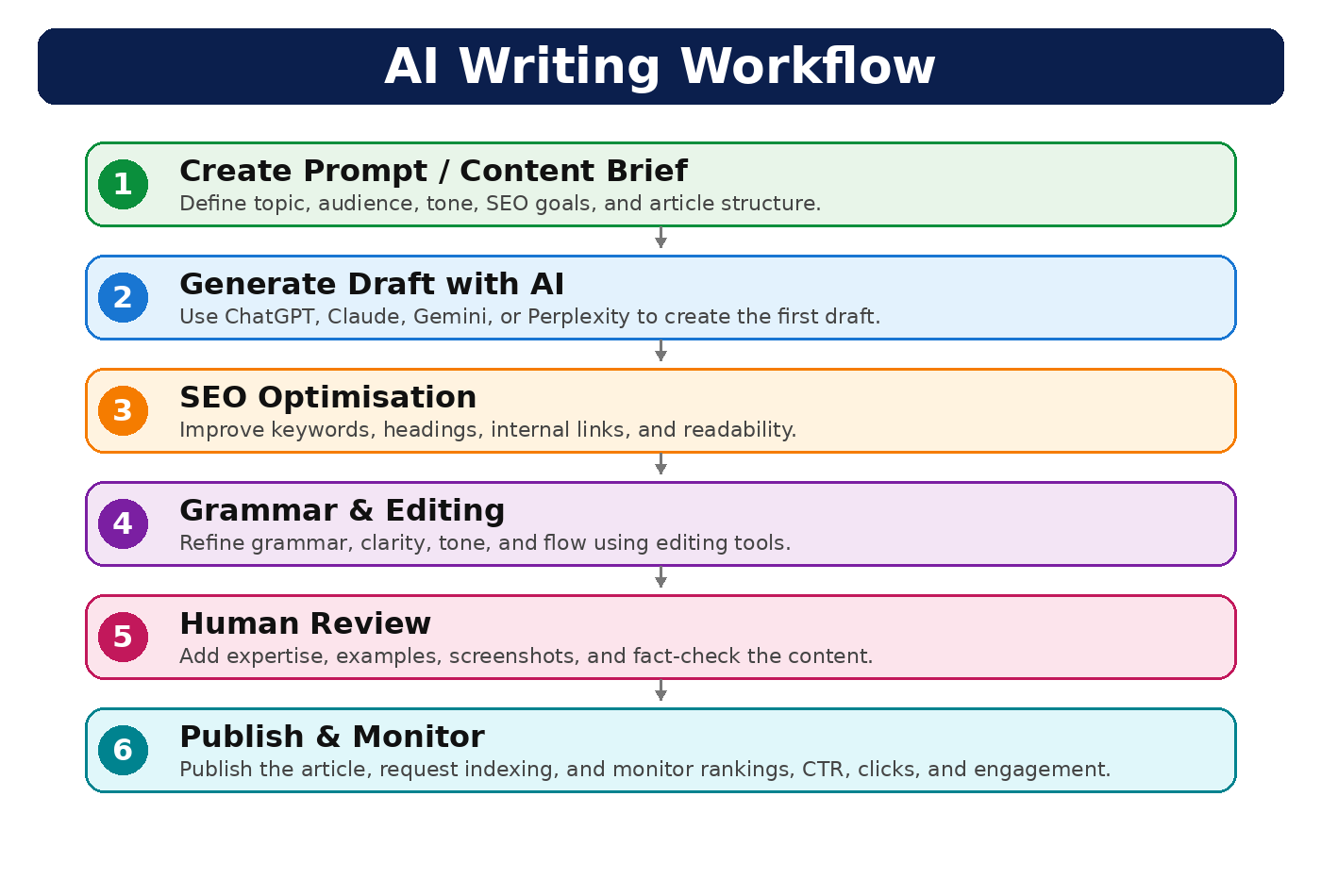
A better workflow looks like this:
Solo Blogger Stack
Claude or ChatGPT for drafting, Surfer for optimization, and Grammarly for polish.
SEO Agency Stack
Frase for briefs, Claude or ChatGPT for drafting, Surfer for optimization, Grammarly for editing, and manual QA before publishing.
Ecommerce Stack
Hypotenuse or Describely for product descriptions, Claude for category content, and Grammarly for final edits.
Budget Stack
ChatGPT free tier, Grammarly free tier, and manual SEO checks.
If you want help improving prompts for this workflow, use our prompt generator guide.
The Real Cost of AI Writing Tools
The monthly subscription price does not tell the full story.
A cheap tool can become expensive if every article needs heavy editing. A more expensive tool can be better value if it saves time and creates stronger drafts.
| Tool Type | Monthly Cost | Editing Time | True Value |
| Claude or ChatGPT | Around $20 | Low–Medium | Excellent |
| Surfer + AI engine | Higher | Medium | Strong for SEO |
| Budget generator | Low | Medium–High | Good for simple content |
| One-click generator | Low–Medium | High | Often poor value |
| Grammarly/QuillBot | Free/Paid | Low | Strong for editing |
The real metric is cost per publishable article, not cost per month.
Common Mistakes When Choosing an AI Writing Tool
Many people choose AI writing tools based on price or hype instead of workflow.
The most common mistakes are:
- Choosing features instead of output quality
- Ignoring editing time
- Trusting AI detector scores too much
- Buying an SEO tool and expecting it to replace a writer
- Expecting one platform to do everything
- Publishing raw AI drafts without fact-checking
- Forgetting search intent
The best AI writing tool is not always the most famous one. It is the one that improves your actual publishing process.
AI Writing and Google in 2026
Google’s position is clear: helpful content matters most.
AI can assist with writing, but content still needs:
- Accuracy
- Originality
- First-hand insight
- Good structure
- Clear answers
- Human editing
- Useful examples
If your content only repeats what everyone else says, it will struggle. If AI helps you create something clearer, deeper, and more useful, it can still perform well.
To understand the bigger picture behind AI-generated content, read our guide on what is artificial intelligence and generative AI.
Which AI Writing Tool Should You Choose?
If you want the best prose, choose Claude or ChatGPT.
If you want SEO structure, choose Surfer or Frase.
If you want a budget tool, choose Rytr or Writesonic.
If you run ecommerce, choose Hypotenuse or Describely.
If you want creative writing help, choose Sudowrite.
If you want cleaner final drafts, use Grammarly.
After testing all 12 tools, one conclusion became clear: no single AI writing tool is perfect. The best results come from combining a strong writing engine, an SEO optimization tool, and a final editing assistant.
Final Verdict
The best AI writing tools in 2026 are not the ones that promise one-click publishing. They are the tools that help you create useful, accurate, readable content with less wasted time.
After testing the tools, the best overall workflow is simple:
Use Claude or ChatGPT for drafting, Surfer or Frase for SEO optimization, and Grammarly for final polish.
That stack produced better articles, required less editing, and performed more consistently than relying on a single AI writing platform.
AI writing tools can absolutely support content creation in 2026, but they work best when humans stay in control. Use AI to speed up the process, then add judgment, experience, editing, and real value before publishing.