




The real strength of a brand is not only what it sells. It is how it treats people when something goes wrong, when a question needs answering, or when a customer simply wants help.
That is why customer care and service matter so much. They shape trust, loyalty, and whether a buyer chooses to come back. Recent customer experience research shows that three in four consumers will spend more with businesses that provide a good customer experience, and 73% will switch to a competitor after multiple bad experiences.
For modern businesses, service is no longer a support function sitting quietly in the background. It is one of the clearest ways to protect revenue and build long-term growth.
What Is Customer Service?
Customer service is the support and assistance a business provides before, during, and after a purchase. It helps people solve problems, get information, and feel confident about dealing with a brand.
That includes things like:
- answering questions
- resolving delivery issues
- handling refunds or complaints
- guiding customers through a product or service
- providing support across chat, email, phone, and social channels
In simple terms, customer service helps customers move from confusion to clarity.
What Is the Difference Between Customer Care and Customer Service?
These terms are closely related, but they are not exactly the same.
Customer service
Customer service is usually task-focused. It deals with the immediate issue, such as tracking an order, changing a booking, or fixing an account problem.
Customer care
Customer care goes a step further. It focuses on how the customer feels during the experience. It is more relationship-driven and proactive.
A useful way to think about it:
- customer service solves the problem
- customer care makes the person feel valued while the problem is being solved
The strongest brands do both.
Why Customer Care and Service Matter More Than Ever
Customers now expect support to be faster, more relevant, and more personal than before. Zendesk’s recent customer experience data says 72% of customers want immediate service, while 64% will spend more if a business resolves their issue on the channel they are already using.
That means modern service is no longer just about having a support line. It is about being available where people already are and making the process feel smooth.
Research also shows that 78% of customers are willing to give a brand a second chance after a mistake if the customer service is excellent.
That is a powerful reminder that service recovery is not just damage control. It can also rebuild trust.
What Customer Service Looks Like in a Digital World
Modern customer service is now an omnichannel experience. People may start with Instagram, continue over WhatsApp, then ask for a follow-up through email or phone. They do not want to repeat everything every time they switch channels.
That is why omnichannel support matters. Qualtrics describes omnichannel customer experience as a seamless, integrated experience across touchpoints, with shared context and continuity between channels.
This also connects directly to your site’s related topics like remote work Australia and cloud CRM, where digital interactions and shared context are essential.
Why Empathy Still Matters
AI is now handling more routine service work, but that has made empathy even more important, not less.
When bots and automation take care of simple questions, the issues that reach human agents are often more complex, more frustrating, or more emotional. Customers in those moments do not only want speed. They want understanding.
PwC notes that strong customer experience helps people feel heard and appreciated while reducing friction and maintaining a human element.
That is why empathy remains one of the most valuable service skills a team can develop.
The Three Essentials of Modern Customer Service
A simple service framework for teams should focus on three things:
Promptness
Customers expect quick responses. Long delays create friction and signal that their time is not valued.
Professionalism
People need to trust the business. Clear communication and calm problem-solving make that easier.
Empathy
Customers remember how they were treated, especially when something went wrong.
When these three elements work together, service becomes a loyalty driver rather than a cost center.
How AI Is Changing Customer Care
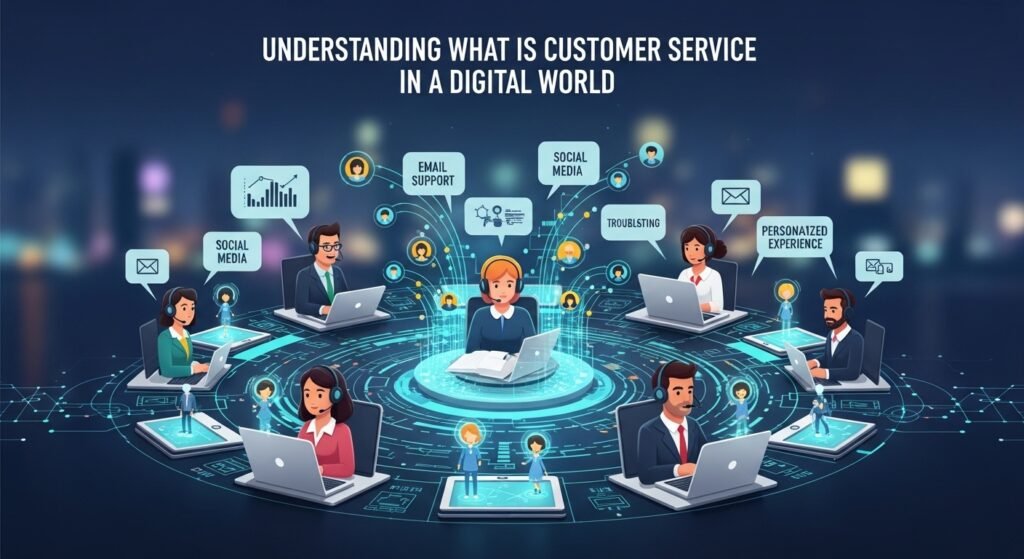
AI is changing customer expectations, especially around speed and availability. Zendesk reports that many consumers now find AI bots helpful for simple issues, and AI is increasingly shaping expectations around immediate responses and smarter self-service.
That does not mean AI replaces humans. It means support is becoming more layered.
A practical model looks like this:
- AI handles repetitive, low-risk questions
- humans handle sensitive, complex, or emotional issues
- systems keep context shared across channels
Why Centralized Support Matters
One of the biggest service problems for growing brands is fragmentation. Messages come in from different platforms, and teams lose track of context.
A centralized support setup helps teams:
- respond faster
- reduce missed messages
- route questions to the right person
- maintain conversation history
- measure where customers get stuck
This is where systems like CRM, CRM software for small businesses, and customer care and service become more important.
Common Mistakes That Hurt Customer Service
Some service problems are very common, and they damage trust quickly.
Slow response times
Customers interpret delays as a sign that their issue is not important.
Over-scripted replies
If teams sound robotic, the interaction feels cold and impersonal.
Poor follow-up
Promising an update and then disappearing breaks trust fast.
No shared context
When customers repeat themselves across channels, frustration rises.
Over-relying on automation
AI can help, but it should not be used as a shield against real human support.
These mistakes are avoidable, but only if businesses design service around the customer rather than internal convenience.
Why Customer Experience Now Drives Growth
Customer experience is not just a support metric. It is increasingly tied to growth. HubSpot’s 2025 Australia business growth report says customer experience is the top growth driver, with 43% of businesses attributing progress over the past year to CX.
That makes service quality a business strategy issue, not just an operations issue.
Good service improves:
- retention
- trust
- repeat purchases
- referrals
- brand differentiation
What the Future Looks Like
Customer care and service will continue moving toward a blended model:
- faster first responses through AI
- stronger personalization
- better omnichannel continuity
- more valuable human involvement in difficult cases
The future is not about removing people. It is about using technology to reduce repetitive work so human teams can focus on the moments that matter most.
Brands that get this balance right will be faster, more consistent, and more memorable.
Final Thoughts
Customer care and service are no longer side functions. They are central to trust, retention, and long-term growth.
People do not just remember what they bought. They remember how easy or difficult it was to get help. They remember whether they felt heard. They remember whether the brand followed through.
That is why service matters so much. It is not just support. It is part of the product experience itself.
FAQs
What is customer service?
Customer service is the support a business gives before, during, and after a purchase to help customers solve problems and get value from what they bought.
What is the difference between customer care and customer service?
Customer service focuses more on solving the issue. Customer care focuses more on the relationship and how the customer feels during the process.
Why is customer service important?
Good service improves trust, retention, and repeat revenue. Research shows customers spend more with businesses that deliver a strong customer experience.
Can AI replace human support?
Not fully. AI is helpful for routine issues, but human support is still important for complex or emotional situations.
What are the most common customer service mistakes?
Slow responses, over-scripted communication, poor follow-up, weak channel continuity, and using automation without enough human backup.